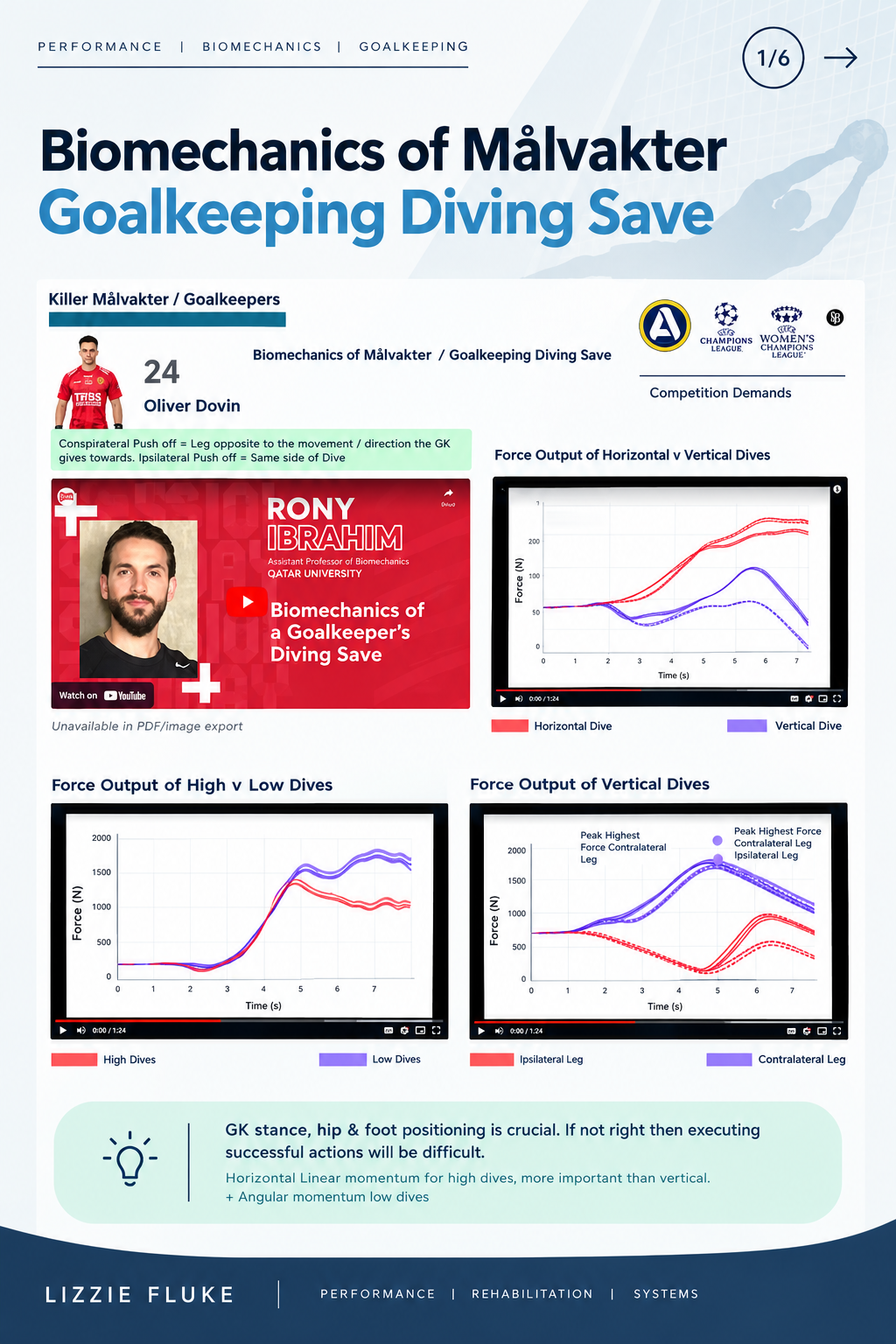
⚽ Goalkeepers Saving Dive: A Retrospective. Here I explain the study by Rony Ibrahim et al (2019) looking at the bio-mechanic subsections of force and motion (movement) of a goalkeepers diving save.
Read More⚽ Goalkeepers Saving Dive: A Retrospective. Here I explain the study by Rony Ibrahim et al (2019) looking at the bio-mechanic subsections of force and motion (movement) of a goalkeepers diving save.
Read MoreI am sharing my 8 stage Hamstring Strength Framework (version 1.0), and rehabilitation, an applied system structured to increase hamstring strength, speed, power, robustness, and durability.
Read MoreWith the Women’s Euros fast approaching in July 2025, the focus is on the physical and psychological demands placed on international footballers.
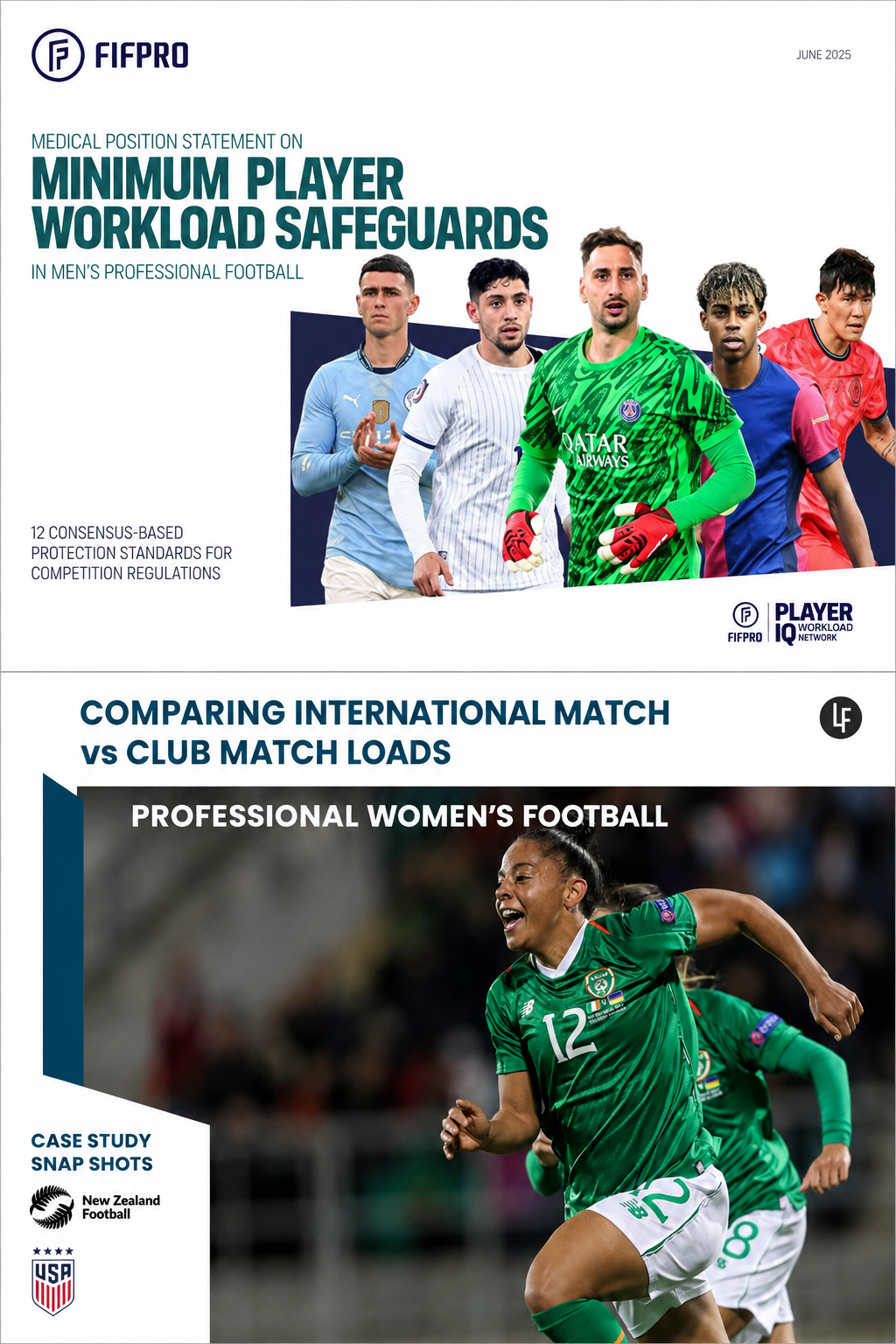
Today, FIFPRO released a landmark consensus from 70 leading experts, establishing 12 evidence-based safety standards to protect athletes from excessive workload. These include guaranteed off-season breaks, retraining periods, and mandatory rest after long-haul travel, underscoring the urgent need for global standards.
Read More“This GPS-Guided Hamstring Rehabilitation Framework sets a new benchmark for athlete care and return-to-play management. By expertly integrating objective GPS metrics with pain-controlled, stage-based progression, it empowers practitioners, coaches, and athletes to make safe, data-driven decisions at every step of rehabilitation. An invaluable, evidence-based resource for performance sport.”
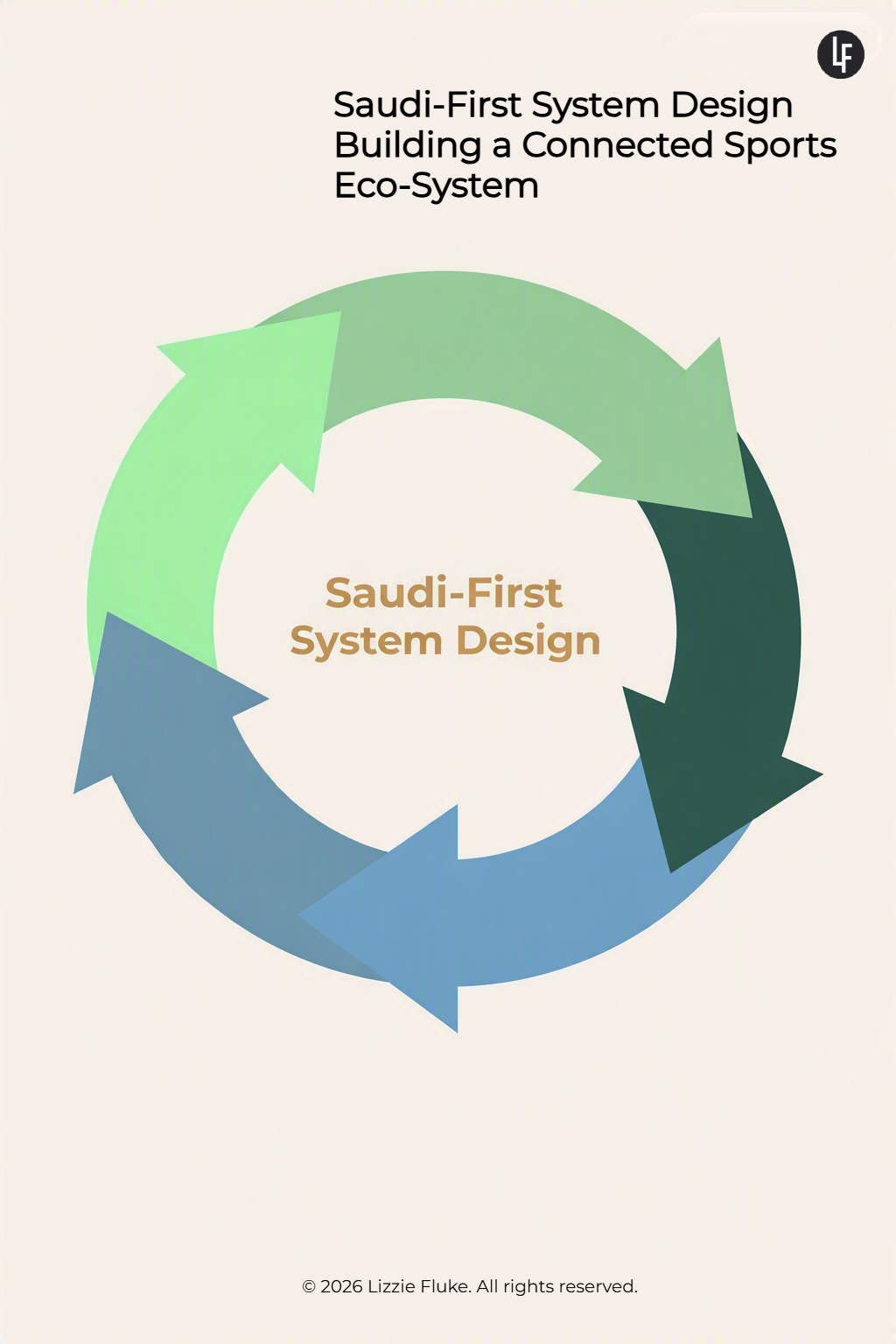
Saudi Sport: The Delivery Layer
Saudi Arabia has built national systems that operate through structured workflows, national coordination, and digital identity integration, supported by compliance pathways, documented requirements, verification steps, service repeatability, and backend governance systems. Governance is embedded in everyday life through a unified national digital infrastructure, clearly documented pathways, defined responsibilities, accountability, and oversight.
Read MoreEdition 5 shows why systems, governance, compliance and processes are critical to delivery, healthy environments, athlete safeguarding and long‑term performance.
Anti-Doping and System Pressure
Edition 5 begins with the anti-doping cases because they show the system under real pressure. Two athletes were subject to active Anti Doping Rule Violation processes.
Read MoreThe challenge is now system connection across differentiated performance environments.
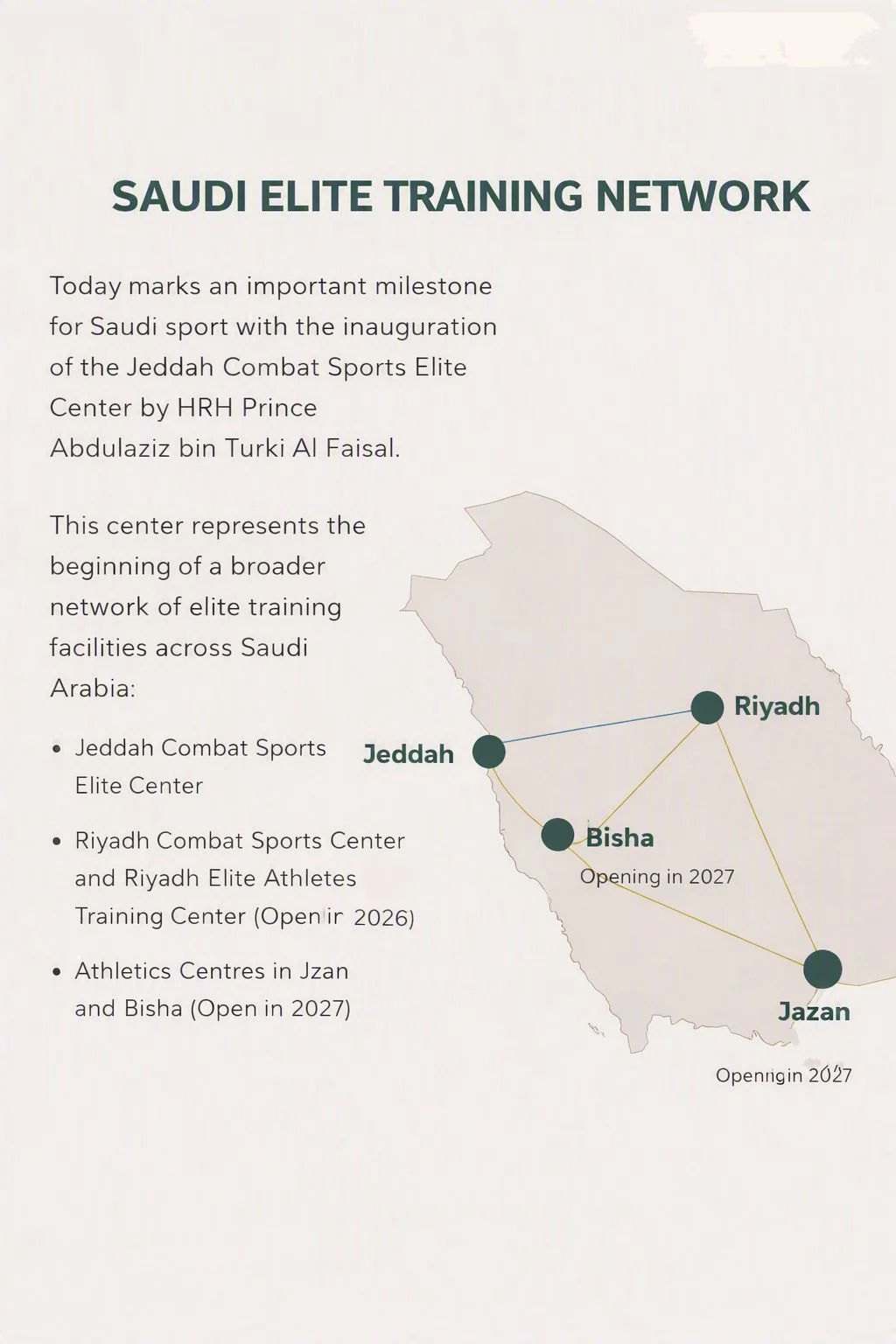
The announcement of the Jeddah Combat Sports Elite Center, alongside planned centres in Riyadh, Jazan and Bisha, signals a shift towards a distributed network of athlete development environments.
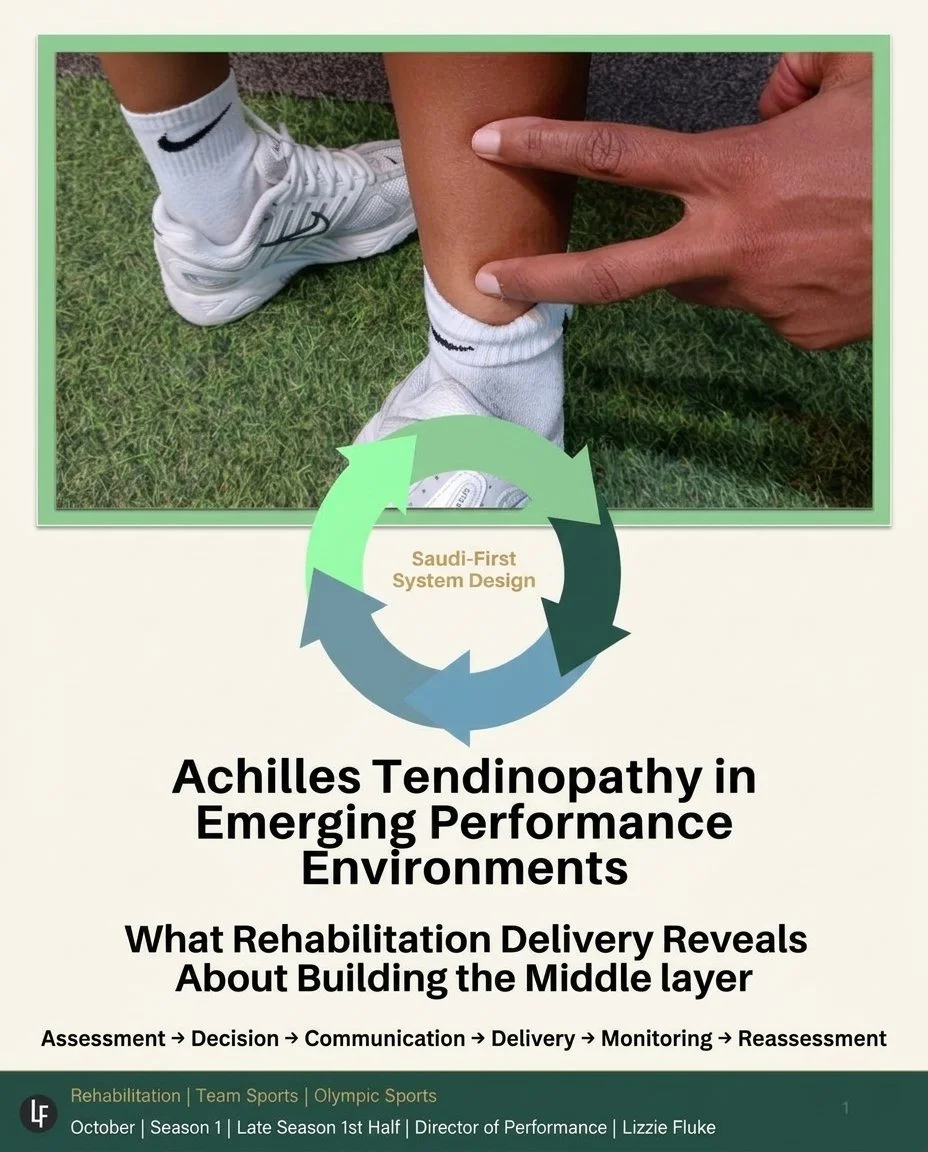
Read MoreThis article explores how rehabilitation pathways are shaped by medical timelines, operational demands, communication structures, environmental constraints, and middle-layer governance inside emerging performance environments. The athlete case becomes a lens through which wider Saudi-MENA system dynamics can be understood.
Read MoreThis post explores the study by Cook, Beaven, and Kilduff, which investigates how combining eccentric training with overspeed exercises can improve power and running speed for athletes. The research highlights the importance of targeting both force (strength) and velocity (speed) components for performance gains
Read MoreSaudi sport grows through regional difference, not uniformity.
The real question is how participation, governance, healthcare, infrastructure and performance systems connect as the ecosystem expands.
Sweden was never presented as a model to copy. It is a lens through which to view how participation, healthcare, rehabilitation, education, governance and pathway systems interact over time, and how connected ecosystems create long-term continuity, capability and progression.
Saudi sport is entering a phase where long‑term performance is increasingly shaped not only by investment, but by governance design, infrastructure coordination, workforce capability, and system integration.
Read MoreSaudi sport is entering a phase where system design, governance clarity, and national delivery determine long term performance.
The next step is understanding how different models operate and what Saudi Arabia can build without inheriting global gaps.
Intelligence Map
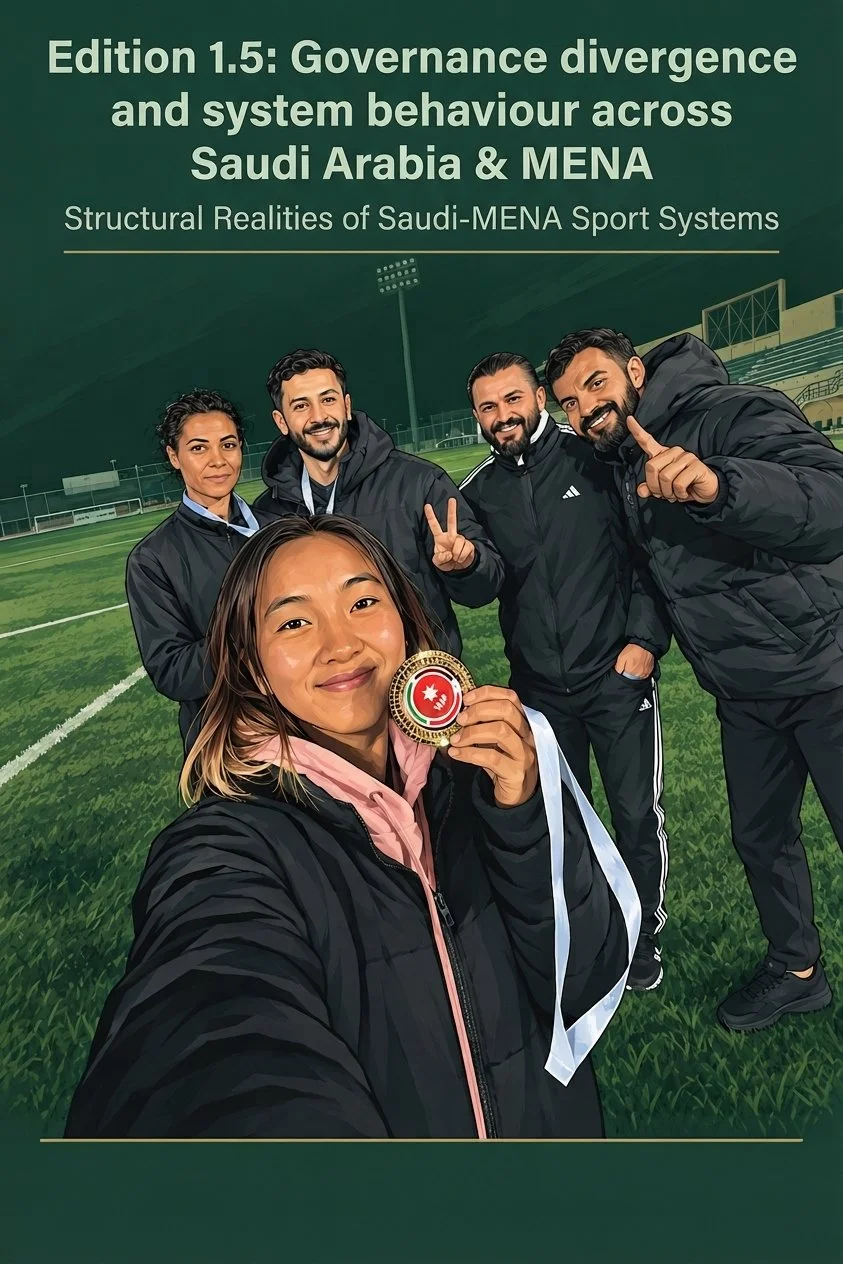
Governance Reality
How Saudi and Jordan (MENA) Sport Actually Works
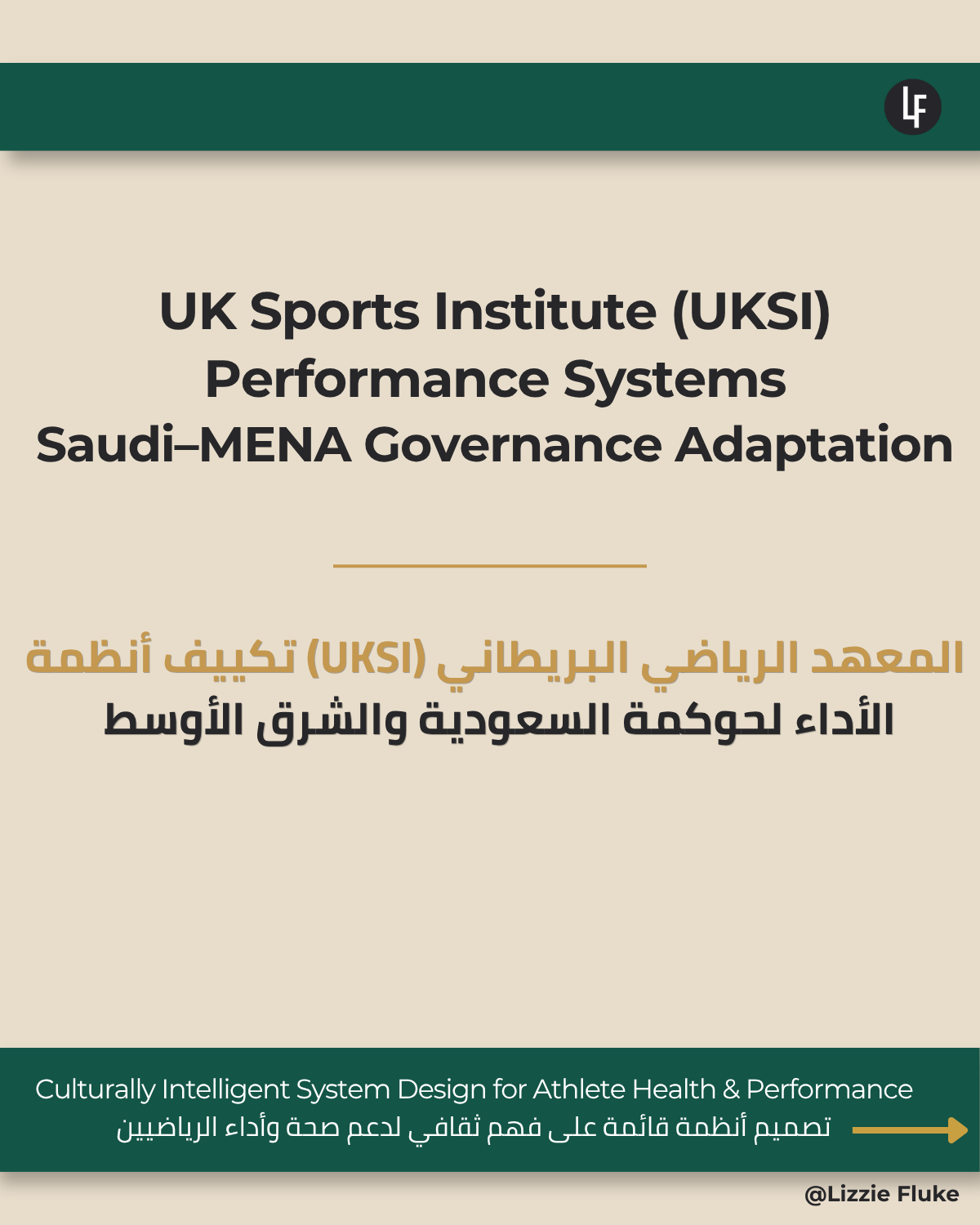
UKSI models were built inside a mature, decentralised, athlete‑centred ecosystem with stable governance, integrated data, and clear clinical decision rights. Saudi and wider MENA sport operate at a different governance altitude.
Read MoreSaudi sport moves through different pathways than the UK.
Read MoreAcross Saudi Arabia, Jordan and the wider MENA region, blood testing practices vary significantly between clubs, federations and competitions.
Read MoreAchilles injuries behave differently in real systems. Two pros, one female, one male, two presentations, two distinct paths.
It was assessment → decision → communication → delivery → monitoring → reassessment.
Federation led systems operate through sport specific autonomy. Each federation defines its own pathway, technical model, and performance strategy. Institute led systems, such as the UKSI or AIS, operate through centralised service provision, offering unified medical, performance, data, and risk management systems across multiple sports.
Read MoreSaudi sport is entering a phase where long-term performance will depend not only on investment, but on how participation, healthcare, rehabilitation, regional capability, and athlete environments develop together over time.
Read MoreRepeat and Recover – Brain, Lungs and Legs
Training IS Testing.
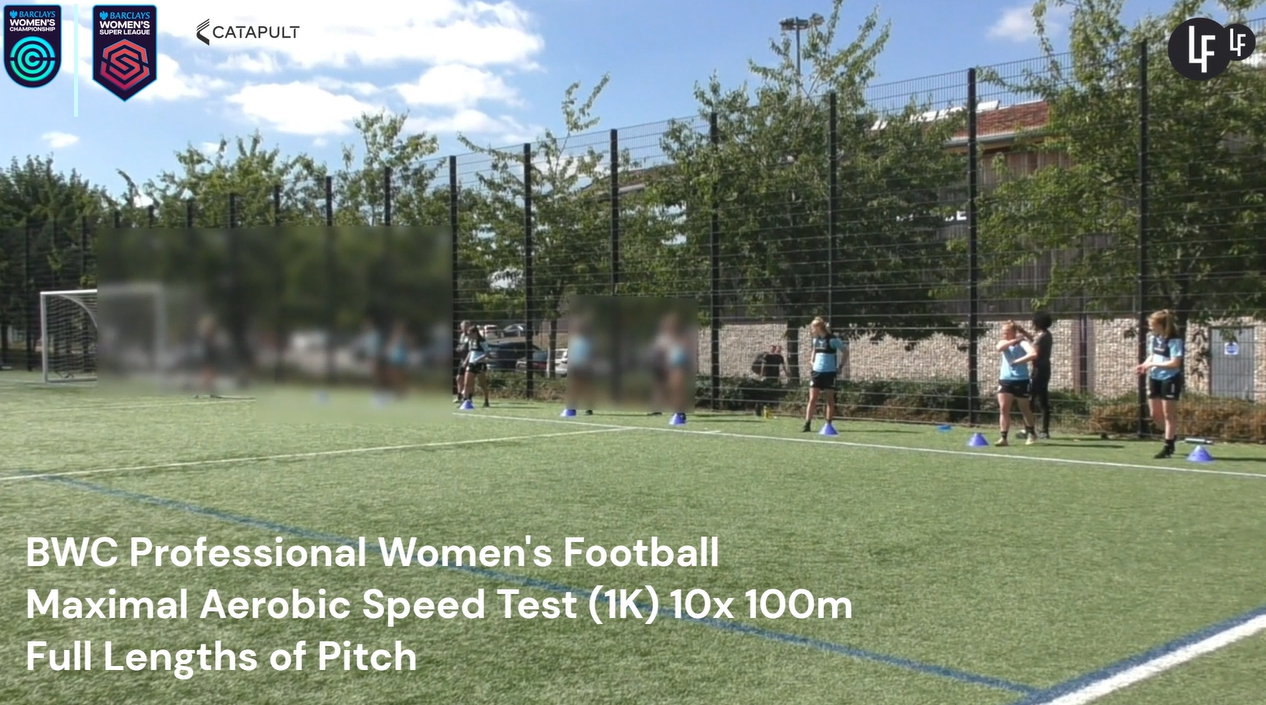
Baseline monitoring is crucial for elite performance. Here I used the England Women's National Team 1km time trial benchmarks to set the standard. The MAS 1km Time Trial challenges athletes to run 10 x 100m pitch lengths, circling cones at each end, to assess fitness levels and recovery, I.e. monitoring HR.