GPS-Guided 8-Stage Hamstring Rehabilitation Framework: Integrated Decision-Making for Practitioners, Coaches, and Athletes
GPS‑Guided 8‑Stage Hamstring
Rehabilitation Framework
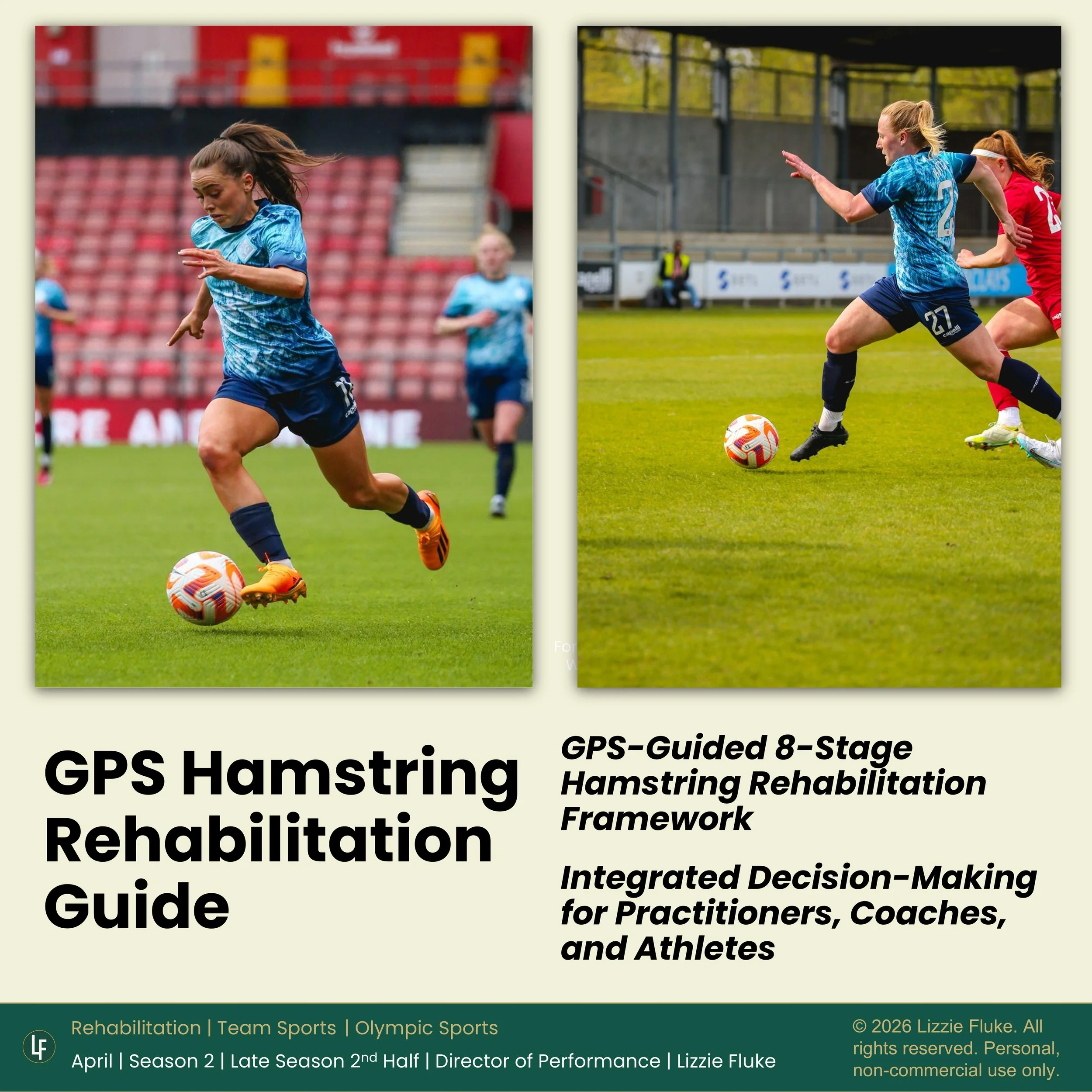
GPS‑Guided Hamstring Rehabilitation Framework:
Integrated Decision‑Making for Practitioners, SEM Doctors,
Coaches, and Athletes
Data-guided return-to-competition decisions using GPS metrics
🔸 Designed for use across men’s and women’s football
🔸 Adaptable to team and Olympic sports
🔸 Progressive, pain-guided rehabilitation stages
🔸 Combines GPS data, athlete feedback, and multidisciplinary decision-making
This framework provides a practical, stage-based approach to hamstring rehabilitation and return-to-competition decision-making. It integrates GPS-derived workload data with pain monitoring, athlete feedback, and clinical judgement to support more individualised progression decisions.
Important: This resource is for educational purposes and does not replace individualised assessment, diagnosis, or treatment by a qualified sports medicine or rehabilitation professional. Return-to-training and return-to-competition decisions should always consider the athlete’s injury history, symptoms, strength and function, sport demands, and the wider multidisciplinary team’s judgement.
How this framework is different
Integrated GPS and Pain-Guided Model
Many rehabilitation approaches use staged progression. This framework brings together GPS-derived external load, pain-guided progression, and athlete-reported response to help practitioners individualise decisions about advancing, holding, or modifying rehabilitation.
Practical Metric Guidance
The framework explains how key GPS metrics—including total distance, metres per minute, high-speed running, sprint distance, accelerations, and relative intensity—can be interpreted across each rehabilitation stage. It includes practical criteria to support decisions on progression, regression, or session modification.
Real-World Application
An anonymised case example illustrates how the framework can be applied in practice, including progression, setbacks, athlete feedback, and the eventual return to competition. It is intended to show how principles can be adapted to the individual athlete and sporting context.
Holistic Athlete Management
Rehabilitation is more than workload data. This framework considers session planning, tissue tolerance, psychological readiness, training availability, competition demands, and communication between the athlete, practitioner, coach, and wider performance team.
New to GPS in Sport?
If GPS monitoring is new to you, the framework introduces key metrics in plain language and explains how they may be used alongside clinical reasoning during rehabilitation. GPS data should always be interpreted in context, considering the athlete, device, position, environment, and stage of rehabilitation.
Who This Resource Is For
This resource is designed for practitioners, sports medicine doctors, coaches, performance staff, and athletes who want a clearer, more structured way to use GPS data and pain-guided progression during hamstring rehabilitation.
It brings together key GPS definitions, practical rehabilitation tables, supporting research, and a real-world case example to help inform safer and more individualised return-to-competition decisions.
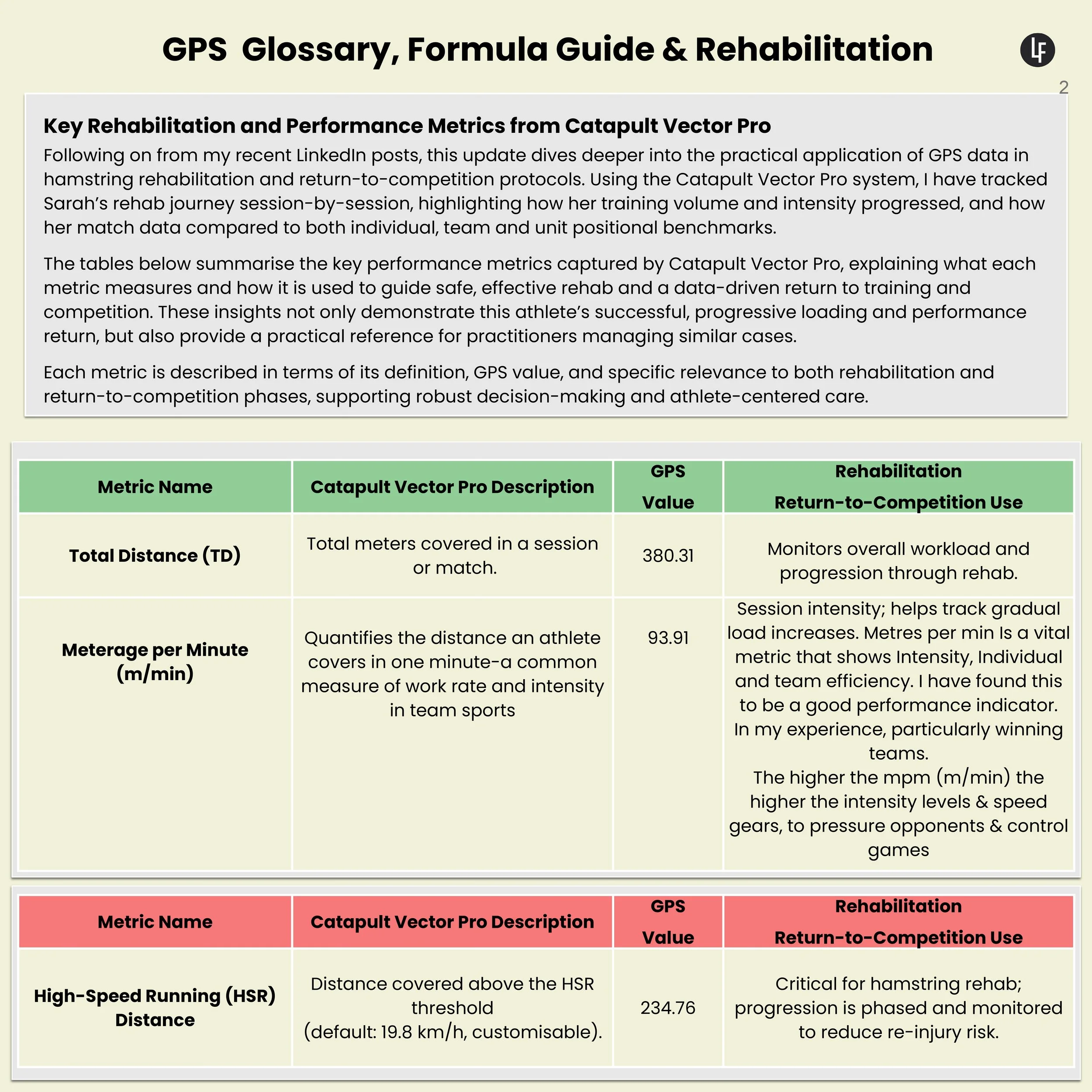
See how session-by-session GPS data—including metres per minute, high-speed running, and acceleration load—can be used alongside athlete feedback and pain-guided progression to inform rehabilitation decisions. The framework is designed to be adaptable across men’s and women’s football, as well as team and Olympic sports.
It brings together GPS metrics, practical progression criteria, athlete experience, and multidisciplinary decision-making to support more individualised rehabilitation and return-to-competition planning.
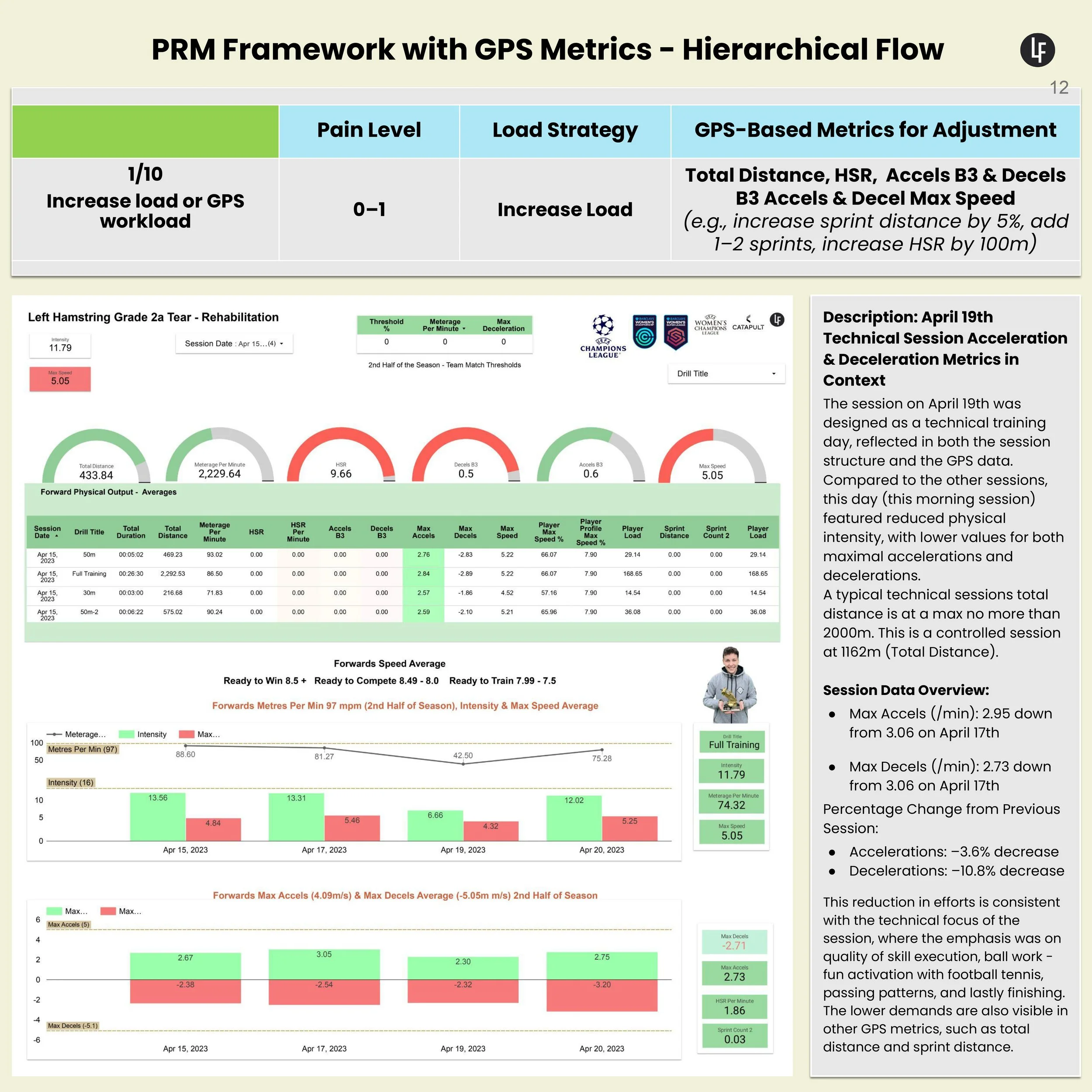

This resource brings together key GPS definitions, practical performance benchmarks, and selected research to support more confident interpretation and application of GPS metrics in rehabilitation and return-to-competition settings.
This document includes:
- Key GPS metrics and definitions, using Catapult Vector Pro terminology as an example
- Practical tables to support rehabilitation and return-to-competition decision-making
- Harvard-referenced research and validation studies relevant to GPS use in sport
- An anonymised real-world case example illustrating how the framework can be applied in practice
If you are looking for a clear, practical reference for athlete management and GPS data interpretation, this guide is designed to help you apply objective information alongside clinical reasoning, athlete feedback, and the wider multidisciplinary team’s expertise.


Next in the series
The accompanying GPS guide expands on the metrics used throughout the framework, including key definitions, practical formulas, interpretation guidance, and supporting research.