Edition 1: Standardising Blood Testing Across Saudi and MENA Sport
Image Credit: Lizzie Fluke: Part 3 - Standardising blood testing across Saudi & MENA sport through culturally intelligent system design for at
Originally published as Edition 1 of the Saudi–MENA Sport Environments LinkedIn Newsletter.
Standardising Blood Testing Across Saudi & MENA Sport
2. What Standardisation Enables
When testing is unified and region aligned, environments gain a clearer understanding of what are athlete individual norms. This reduces inefficiency, errors, prevents missed issues and supports more accurate decision making across clubs, federations and national teams.
Standardisation also strengthens the quality of medical information available to coaches and performance members. When data is consistent, comparable and interpreted through age, gender and ethnicity specific ranges, it becomes a reliable tool for planning training, managing fatigue and supporting athlete development. It also ensures that medical, performance and the coaching team are working from the same information, reducing the risk of miscommunication or misalignment. The ability to make course corrections and protect athlete health is a shared responsibility across sport organisations.
Shared Standards for Emerging and Developing Environments
In emerging and developing environments, it is important that shared processes and unified terminology allow teams to move, coordinate and plan effectively in evolving or uncertain contexts. Consistent athlete standards maintained across teams regardless of operational or structural change support safer training environments, more informed performance planning and stronger long term athlete pathways. It also ensures that medical decisions are aligned with the realities of Saudi and MENA sport, where environmental factors, cultural considerations and regional health patterns must be integrated into every stage of interpretation and follow up.
2a. Standardisation & Strategic Value
Standardisation transforms blood testing from isolated medical tasks into coordinated performance infrastructure. Unified protocols deliver clear athlete norms across clubs and federations for consistent decision making, operational stability when team members rotate or structures evolve, and comparable data for training planning, fatigue management and long term development.
Region aligned interpretation ensures medical accuracy reflects Saudi and MENA realities, environmental factors, cultural considerations and Arabic and Black athlete physiology.
Strategic Outcomes
- Reduced misinterpretation risks
- Stronger coach–medical alignment
- Timely interventions protecting athlete health
- Vision 2030 performance infrastructure
In emerging environments, consistent standards mean athlete care survives organisational change. Medical decisions become predictable, defensible and scalable across competitions and career stages.
3. Age, Gender and Ethnicity Interpretation
Age, gender and ethnicity specific interpretation is essential for accurate decision making in Saudi and MENA environments. Standard ranges developed in Western populations do not always reflect the physiology of Arabic, African or South Asian athletes, which can lead to misinterpretation, unnecessary escalation or missed issues. Individual athlete norms and unified interpretation frameworks ensure that results are assessed through region aligned reference points that reflect local health patterns, environmental demands and cultural considerations.
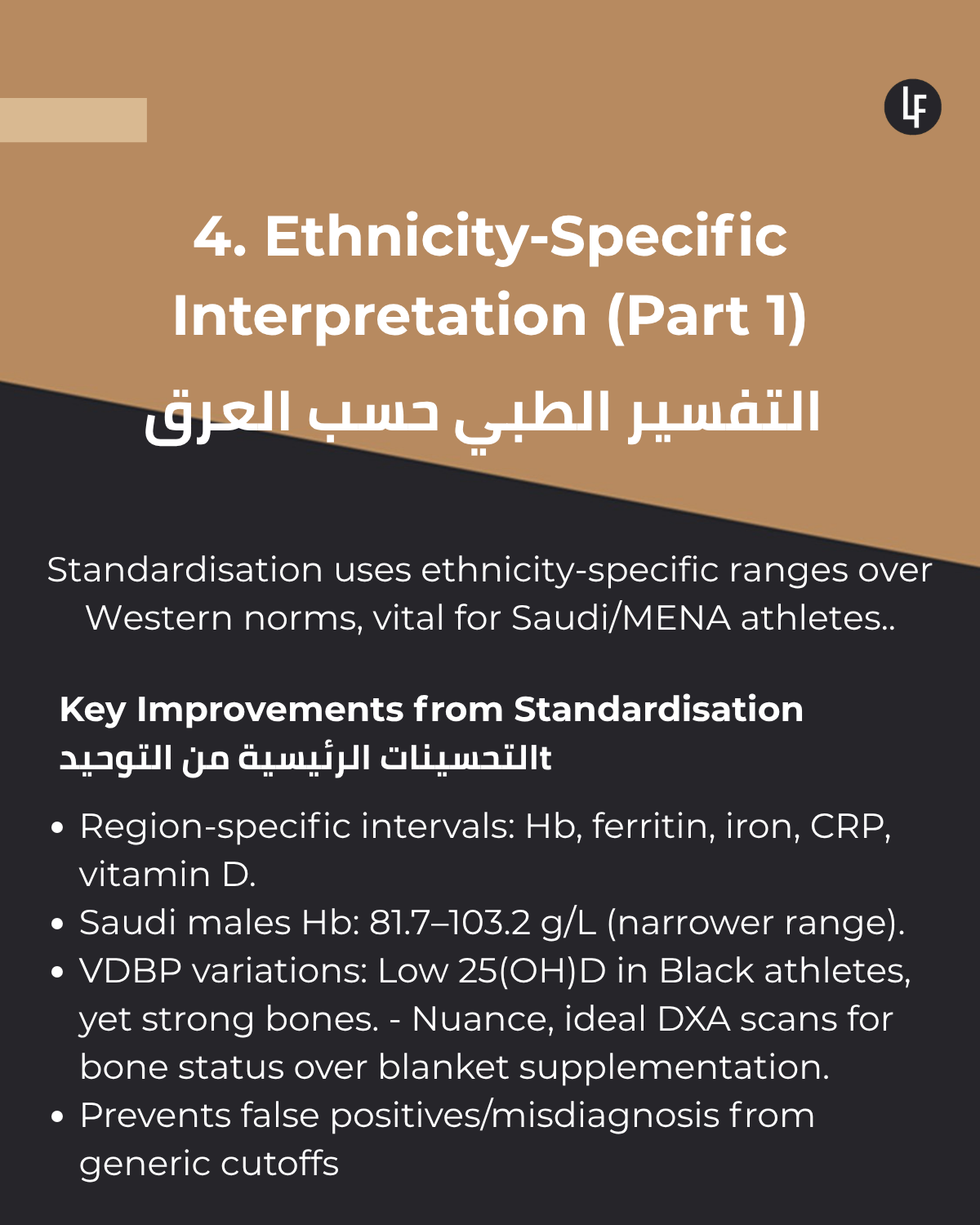
Ethnicity-specific interpretation reduces misdiagnosis in Arabic and Black athletes
Key Considerations
- Differences in haemoglobin, ferritin and vitamin D patterns across Arabic, African and South Asian athletes
- Variation in hormonal markers linked to age, gender and maturation
- Environmental and cultural factors influencing hydration, recovery and training response
- The need for individual baselines to distinguish normal variation from genuine risk
Consistent interpretation supports safer training decisions, clearer communication between medical and performance teams and more accurate identification of individual athlete norms. It also strengthens long term development pathways by ensuring that changes in health, recovery and performance are tracked against appropriate benchmarks rather than generic global standards.
4. Thalassemia and Iron Deficiency
Thalassemia and iron deficiency are two of the most common and high impact findings in Saudi and MENA athletes. Without region aligned interpretation, these conditions are often misread, leading to unnecessary supplementation, missed risks or incorrect assumptions about fatigue, recovery or performance. Unified testing ensures that results are interpreted through appropriate regional ranges and that follow up reflects both medical accuracy and cultural context.
Key Considerations
- High regional prevalence of thalassemia traits that can mimic iron deficiency
- The risk of unnecessary iron supplementation when thalassemia is not identified
- The need for ferritin, haemoglobin and red cell indices to be interpreted together
- The impact of low iron stores on fatigue, training load tolerance and recovery
Accurate identification supports safer medical decisions, protects athlete health and ensures that performance issues are not misattributed to incorrect causes.
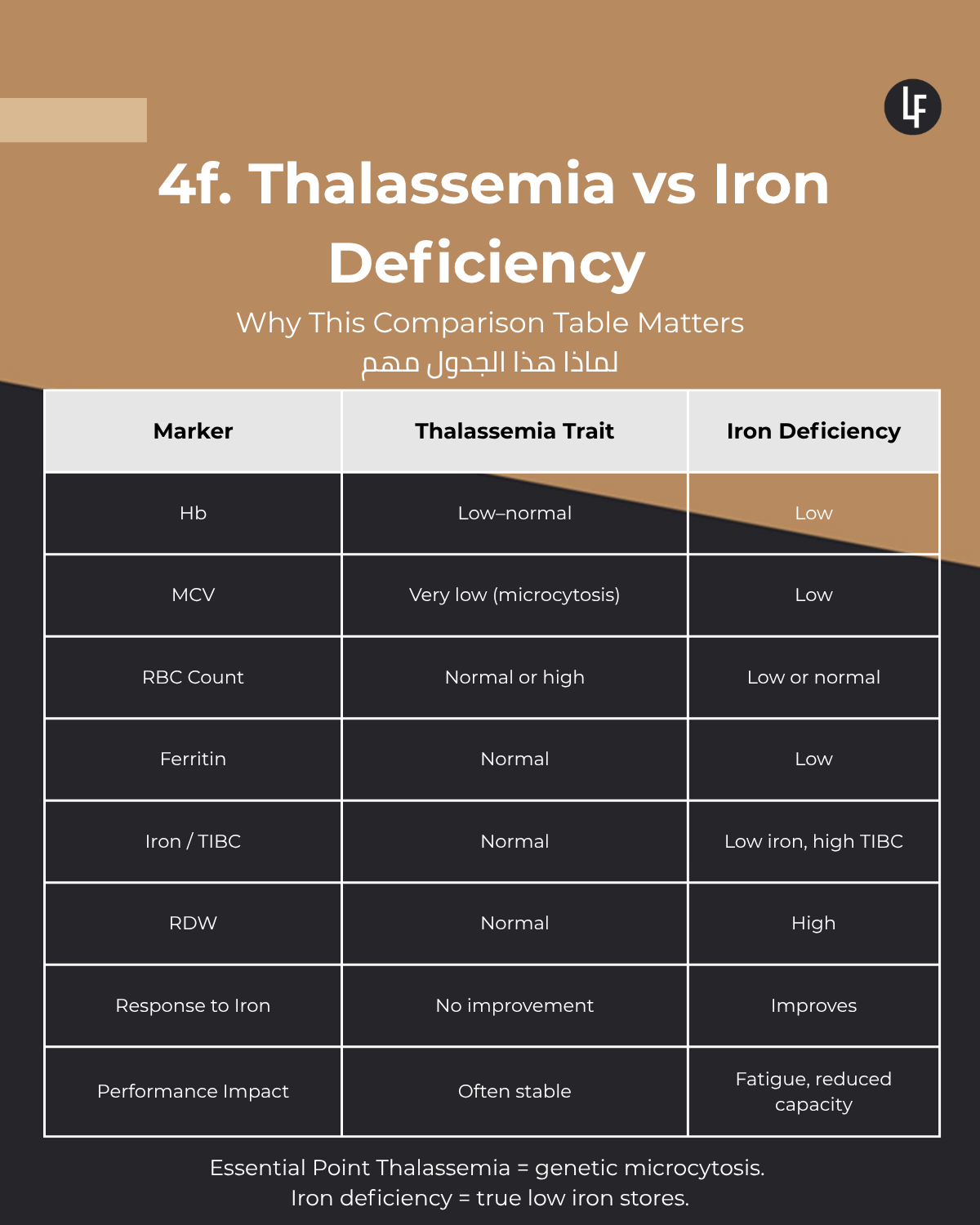
Thalassemia vs iron deficiency comparison
5. Women and Girls: Menstrual Cycle and Blood Testing
For women and girls in Saudi and MENA environments, menstrual health is a central part of accurate blood test interpretation. Cycle phase, symptoms and hormonal patterns directly influence iron status, recovery, fatigue and overall performance. Without cycle aware testing, results can be misread or early signs of risk can be missed.
Key Considerations
- Iron, ferritin and haemoglobin naturally fluctuate across the menstrual cycle
- Heavy bleeding increases the risk of low iron stores and fatigue
- Hormonal changes influence hydration, sleep, recovery and training response
- Cycle tracking provides essential context for interpreting blood markers accurately
Cycle aligned testing protects athlete health, supports safer training decisions and ensures that medical interpretation reflects the realities of female physiology across all age groups. Without this, training days and match availability can be affected, reducing progression and consistency.
6. Kidney Function and eGFR
Kidney function markers, particularly eGFR, require careful interpretation in Saudi and MENA environments. Standard global ranges do not always reflect the physiology of Arabic and African athletes, who may naturally present with higher muscle mass, different hydration patterns and environmental stressors that influence creatinine and filtration rates. Age and gender also shape kidney marker interpretation, with younger athletes and male athletes often showing higher creatinine due to muscle mass and training load. Unified interpretation frameworks ensure that kidney markers are assessed through region aligned reference points rather than generic global thresholds.
Key Considerations
- Creatinine levels influenced by muscle mass, training load, age and gender
- eGFR equations that may under or overestimate kidney function in Arabic and African athletes
- Hydration status affecting results during high temperature training periods, including fasting and Ramadan
- The need for repeat testing to distinguish temporary changes from genuine medical issues
Accurate interpretation protects athlete health, prevents unnecessary restriction and ensures that medical decisions reflect the realities of training and competition in the region.
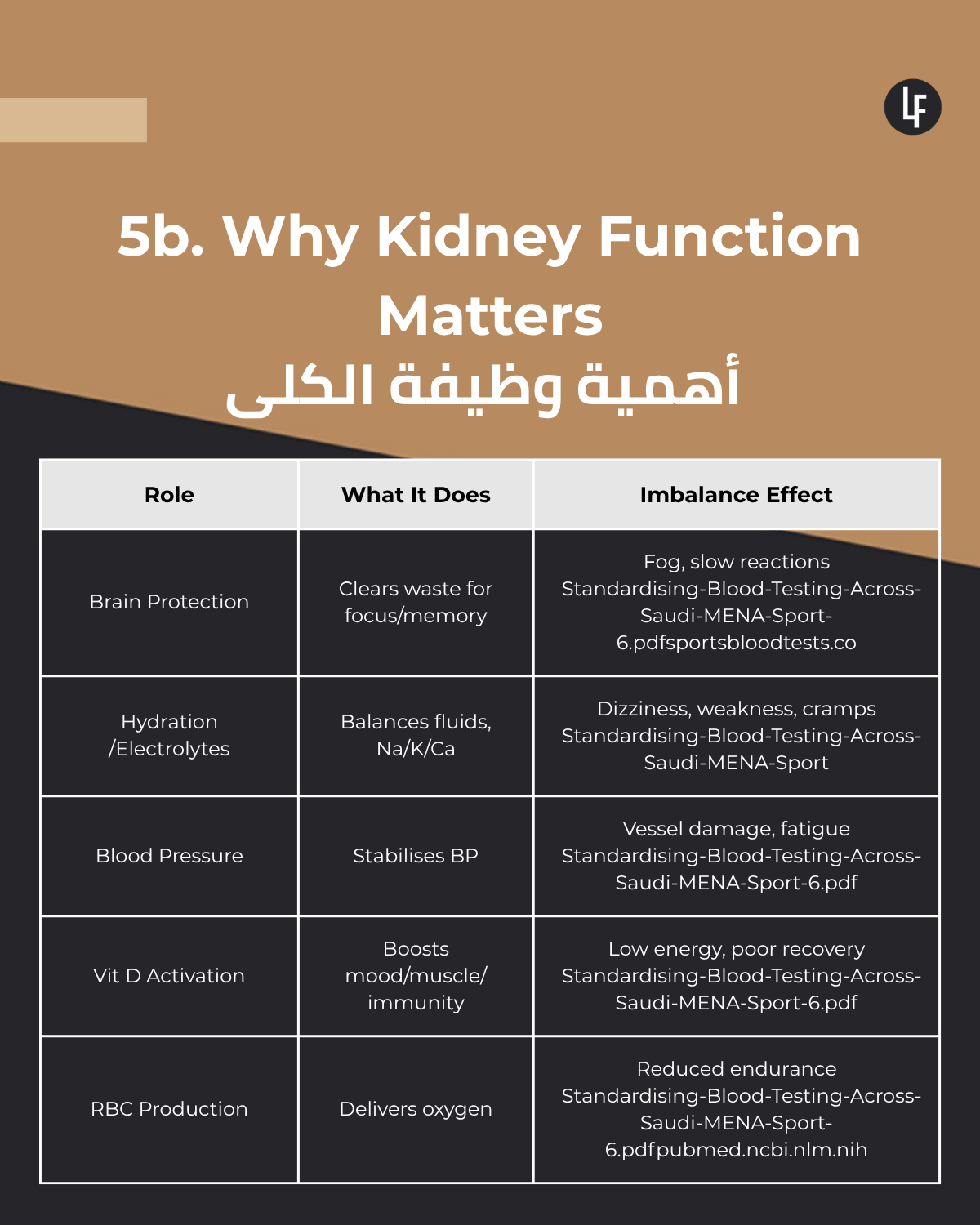
Kidney function underpins hydration and performance in heat.
7. Governance and the 2025 Testing Cycle
The 2025 testing cycle exposed governance gaps that slowed early detection and medical decision making across Saudi and MENA environments. Variation in Association and club processes, indirect communication and inconsistent oversight showed how easily information can be delayed or lost. Unified governance and region aligned pathways are essential for athlete safety and long term planning.
Key Findings
- Delayed reporting and indirect communication
- Limited club involvement in follow up
- Variable interpretation processes
- No standard timelines or escalation pathways
A unified governance model ensures timely testing, direct communication and consistent medical decisions across competitions, age groups and organisational structures.
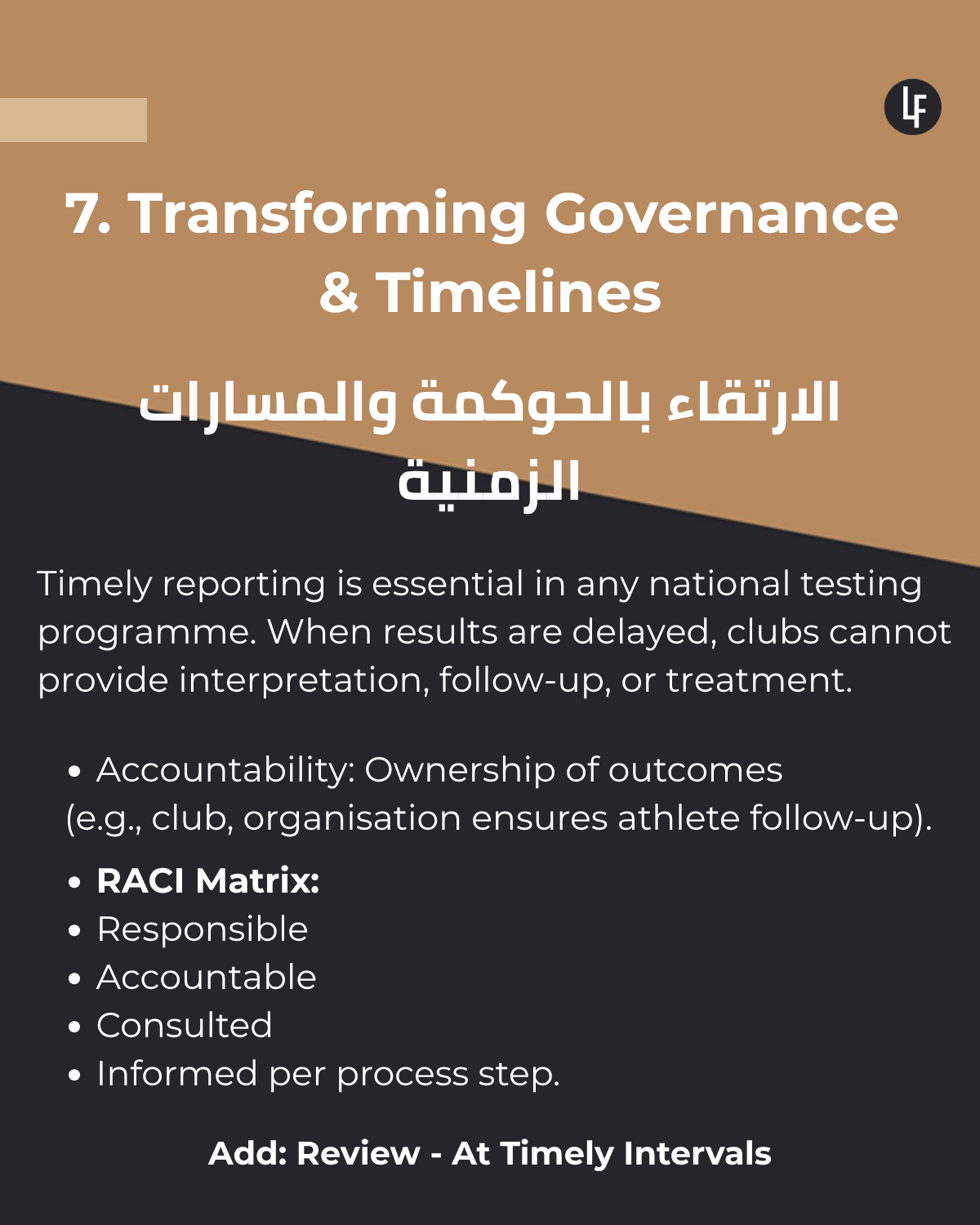
Governance, timelines and RACI strengthen medical pathways across Saudi and MENA Environments
8. Building a Safer, Stronger System
A unified testing system strengthens athlete safety, medical accuracy and organisational accountability across Saudi and MENA environments. When every club, association and federation follows a unified process, information moves at a pace that is safe for athletes and aligned with regional realities. Risks are identified earlier and decisions become more consistent.
What a Stronger System Delivers
- Clear pathways for follow up and medical action
- Region appropriate communication between clubs, federations, associations and medical teams
- Consistent standards across age groups, competitions and environments
- A stable foundation for long term athlete development
Unified systems protect athletes, support staff and strengthen the wider performance ecosystem.
Unified testing is cultural, operational and governance alignment for Saudi MENA sport. Safer environments. Clearer decisions. Stronger athlete health and performance systems.
The full 28 page carousel is available for download below.
Proven: Etihad Club | London City Lionesses | Saudi Olympic Committee | Rio 2016 (Fencing and Judo, Olympic Multi Sports) Connect: Hello@lizziefluke.com | www.lizziefluke.com
Part 4 next week: SCFHS aligned medical reporting frameworks for sport clubs, federations and health organisations.