Achilles Tendinopathy in Emerging Performance Environments: What Rehabilitation Delivery Reveals About Building the Middle layer
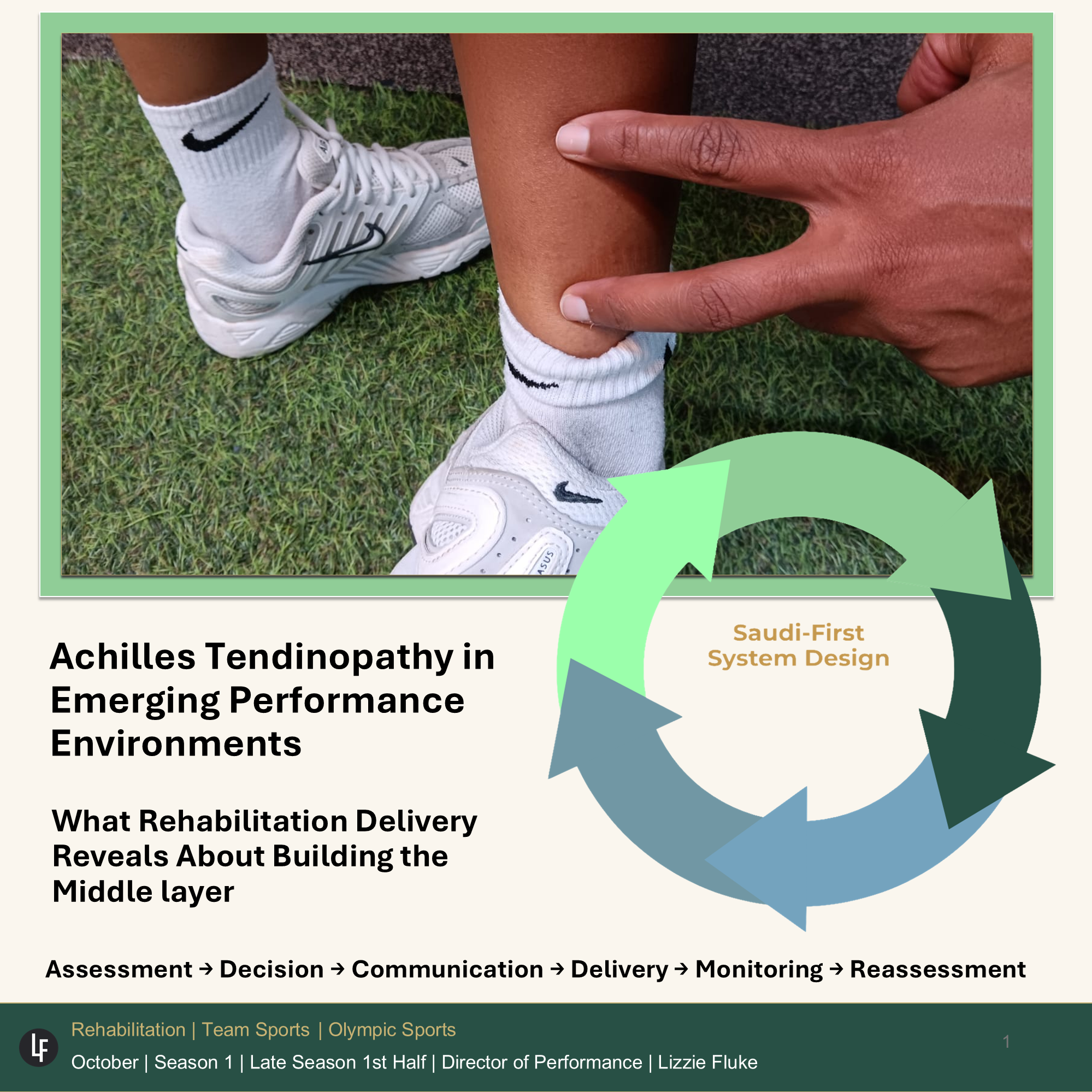
Achilles injuries behave differently in real systems. Two pros, one female, one male, two presentations, two distinct paths.
It was assessment → decision → communication → delivery → monitoring → reassessment.
Because rehabilitation is rarely linear.
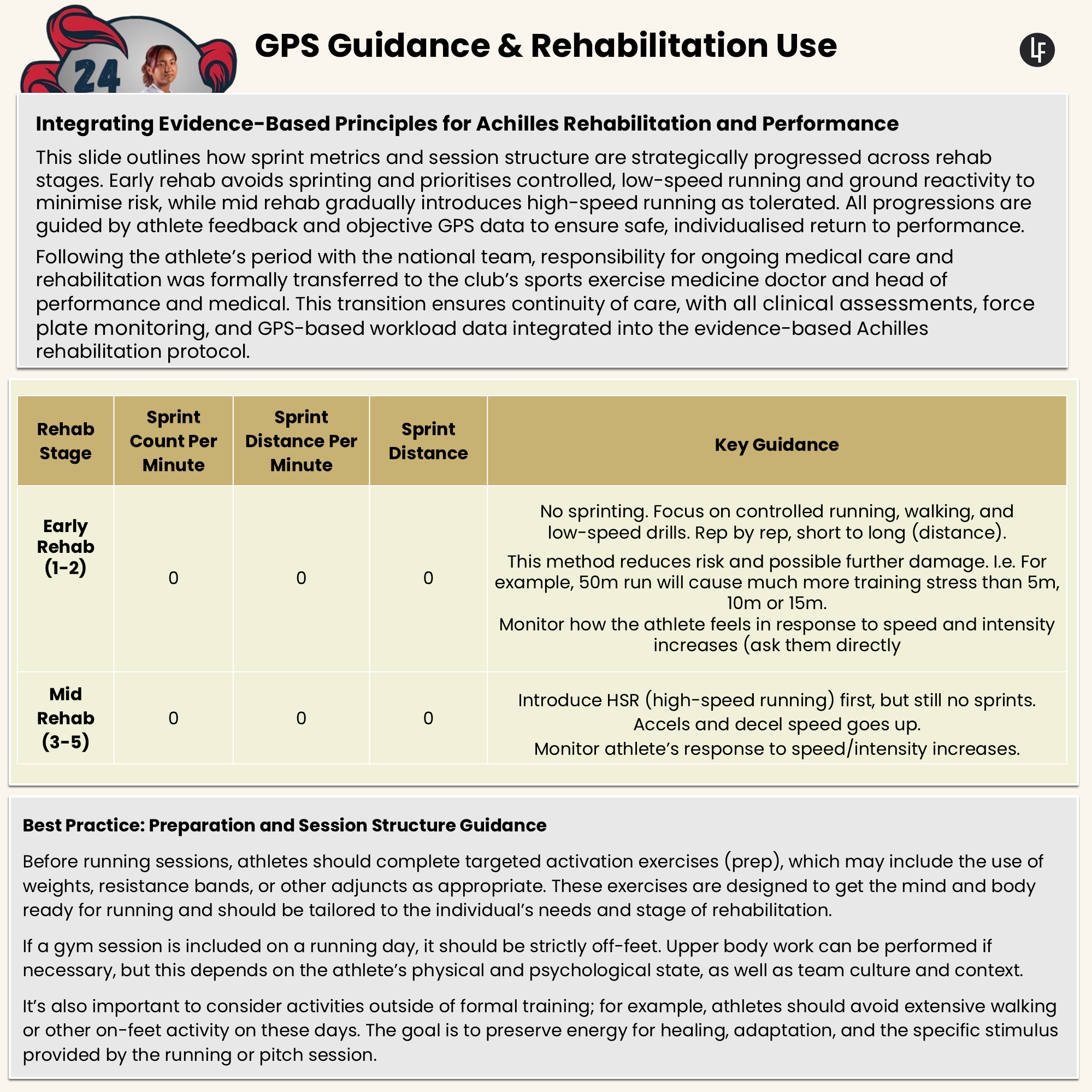
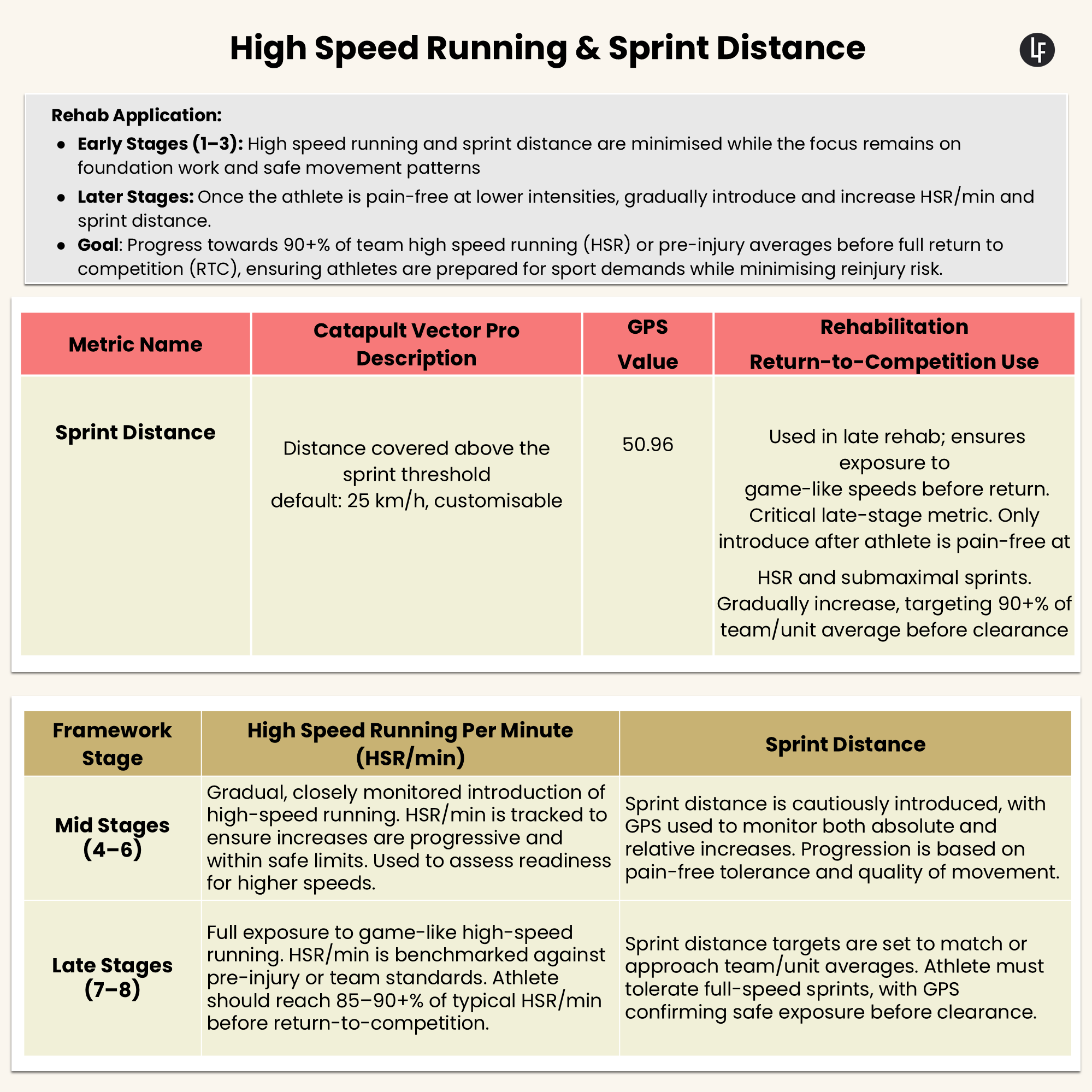
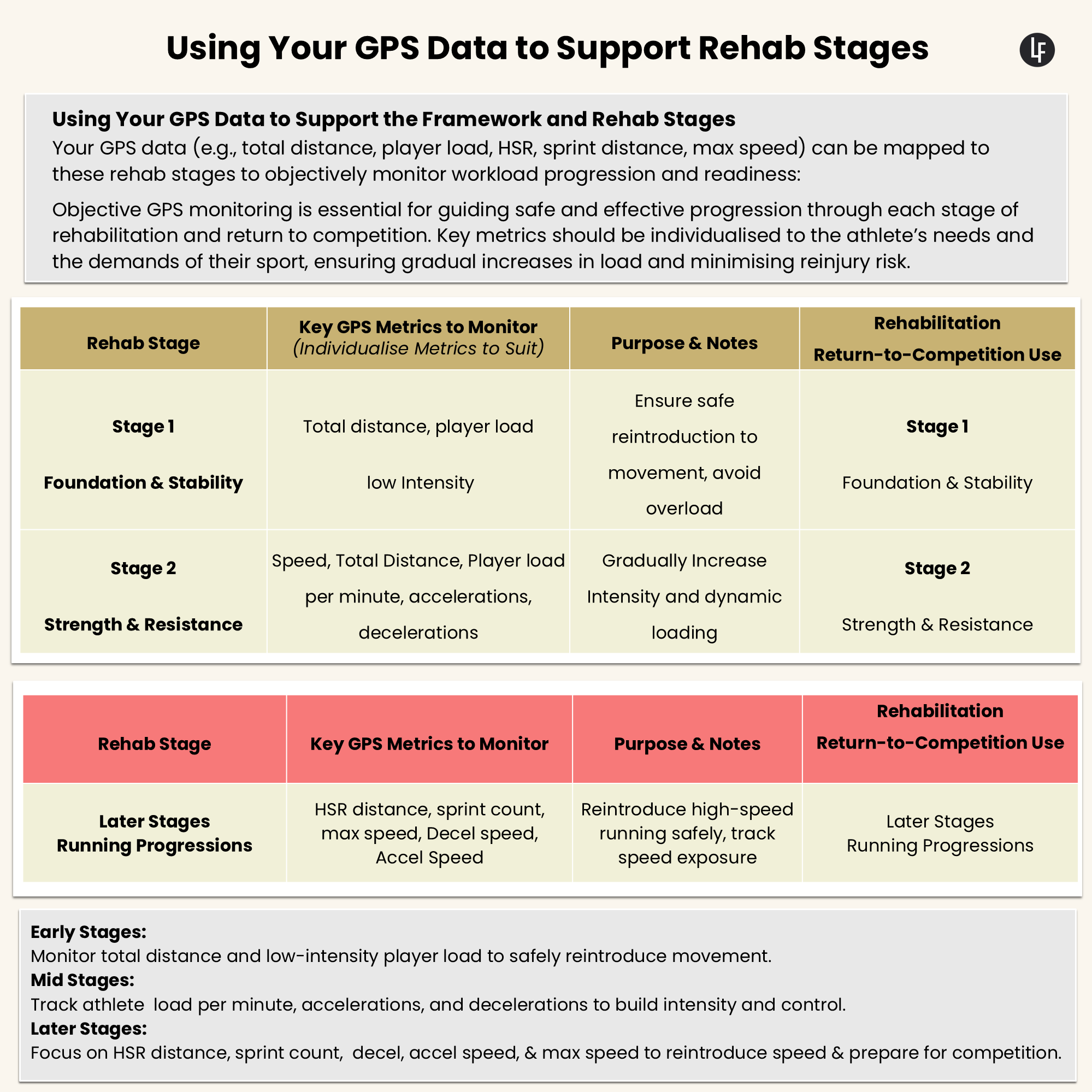
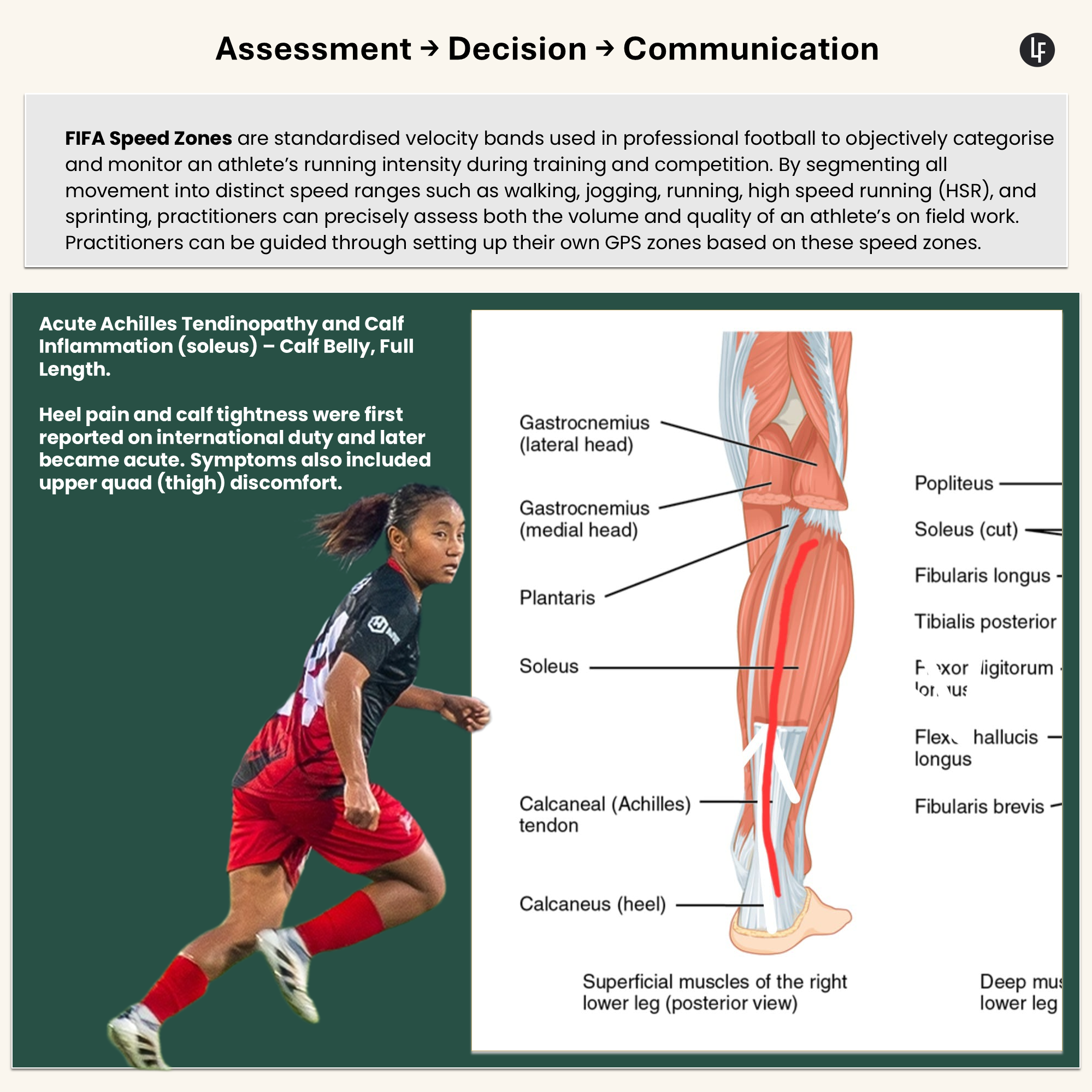
Here is a snapshot of the pro‑female player’s rehab guidance.
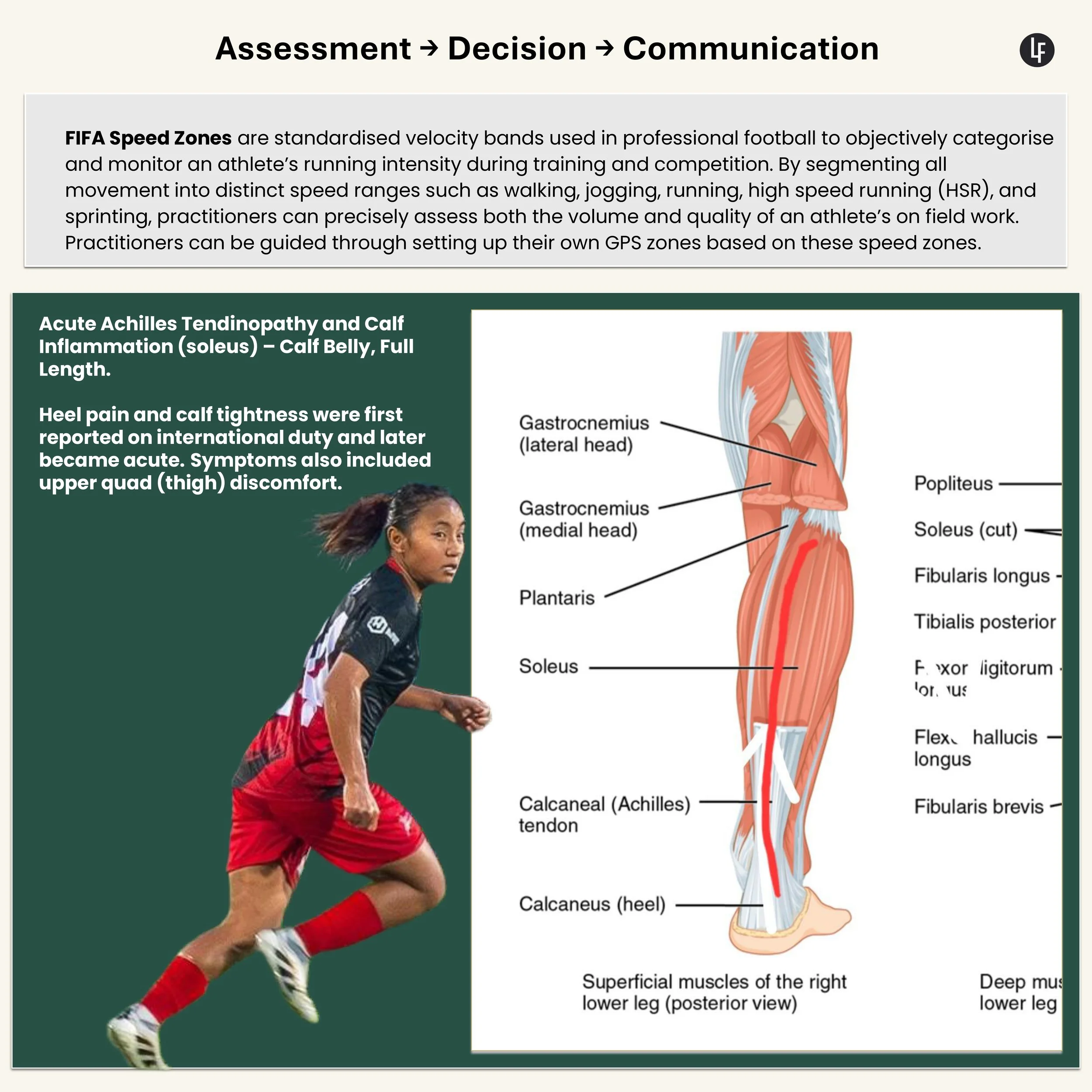
Achilles tendinopathy shows up differently in developing systems. Treatment was similar across both cases, but the female player did not complete any reactive work due to calf inflammation. The aim was to calm the tendon and calf down. Pool work was used, no contrast (no heat whatsoever).
Both had very reactive, irritable, “grumbly” tendons, but for completely different environmental reasons.
Match and training density, international duty and long‑flight travel, load and intensity increases while away with national teams, playing surface issues, university schedules, and the reality of managing multiple injuries at once all played a role. Dysfunction in one area can create dysfunction in another.
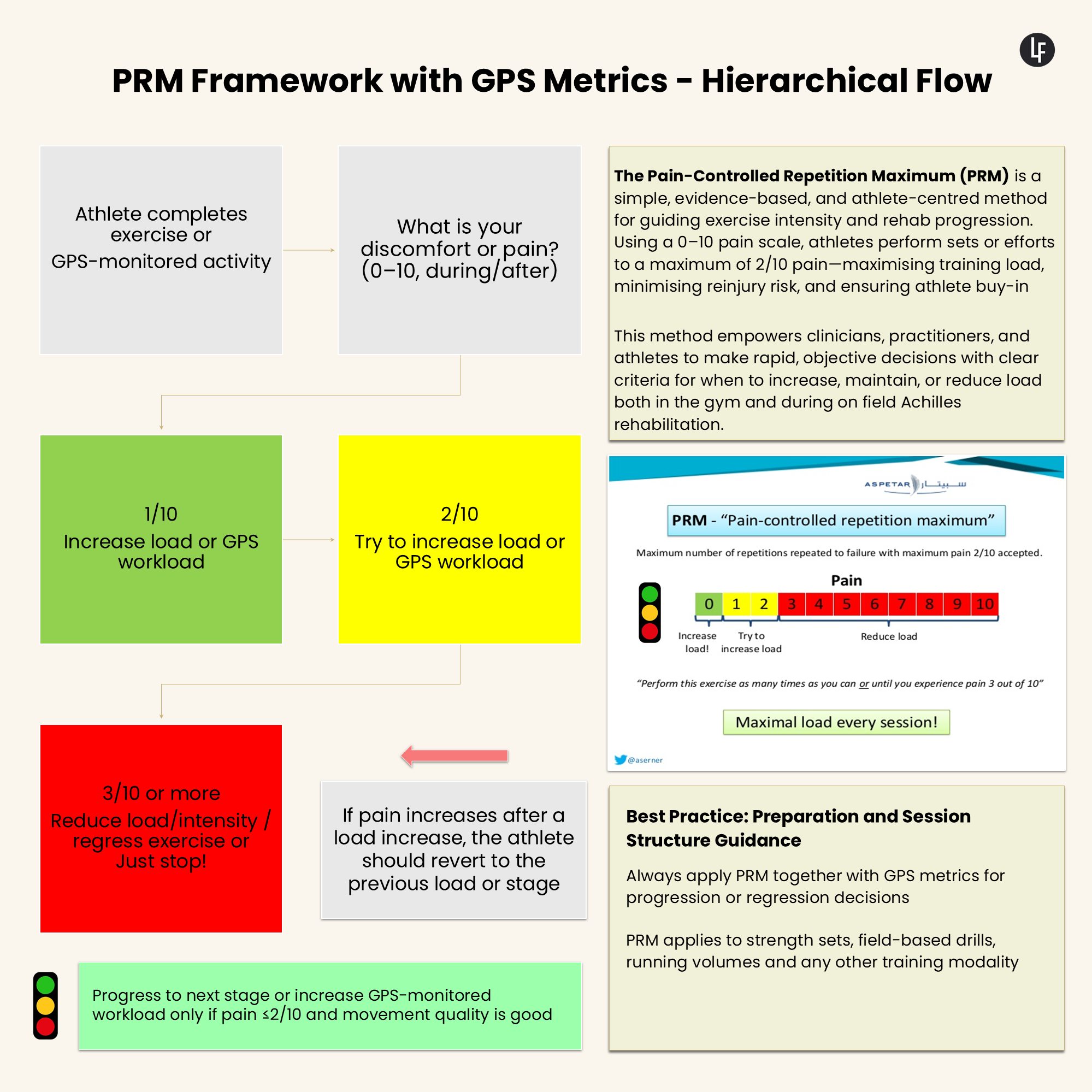
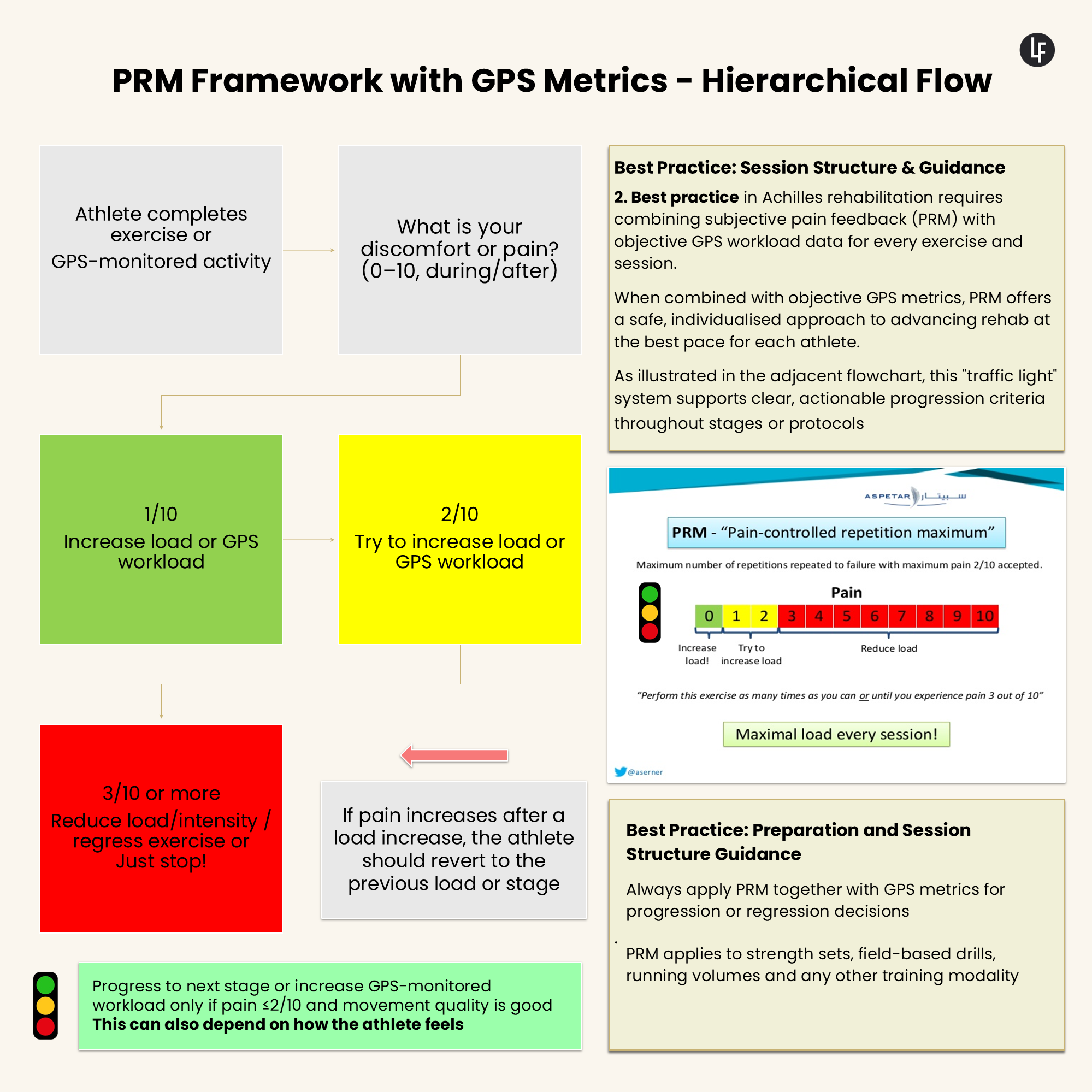
This framework brings together GPS‑guided progression, pain‑controlled decision‑making, and clear communication between physio, coach, and athlete. It is built from on the ground daily work and acute cases, applying tried and tested effective solutions that work on and off the field. In this situation, both athletes were key for their teams: one preparing for professional trials in Portugal, flights, and training; both preparing for league matches and senior international duty.
I wrote about this in an older blog that looks at pain, the brain, and tendon behaviour in tendinopathy.
Read the full breakdown here: https://www.lizziefitness.com/lizzie-fluke-blog/tendinopathystratgies-the-brain-sportsperformance-and-injury
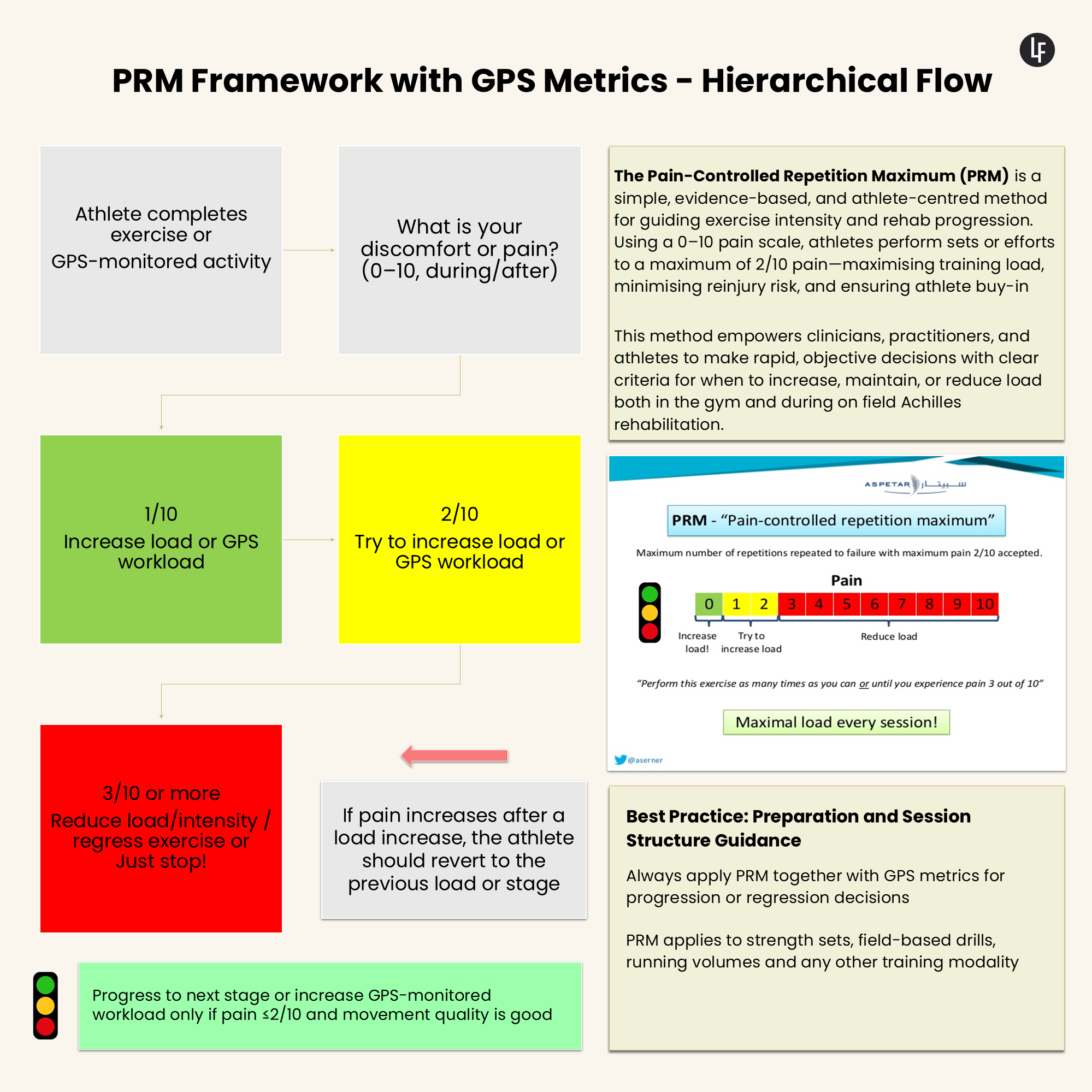
A practical structure for clinicians and performance team working in emerging environments.
How athletes communicate their symptoms was an excellent learning space shaped by inexperience, language, nationality, and for me, first early exposure to traditional medicine beliefs and how they influence rehabilitation decisions. (Nepalese)
Athletes were introduced to rehabilitation approaches unfamiliar within their previous environments. I ensured performance and medical presence during assessment and treatment with our private provider partner (ultrasound, suction-electrical muscle stim).
This is middle-layer practice.
1:1 rehabilitation on and off the field.
Both cases returned successfully with no recurrence.
Tendon irritability drives athlete progressions. How the tendon responds within 24 hours tells you more than imaging ever will. If pain settles quickly, you can continue with load. If it remains sore and painful, stiffens, or symptoms spike in the next morning, you adjust. The aim to calm the tendon and inflammation and reduce, remove soreness. I wrote about this in an older blog that looks at pain, the brain, and tendon behaviour in tendinopathy.
Every rehabilitation need runs through: assessment → decision → communication → delivery → monitoring → reassessment.
The athlete is at the centre. In emerging environments rehabilitation pathways can differ.