Comparing International Match vs Club Match Loads
Comparing International Match
vs
Club Match Loads
International Match Demands & Athlete Welfare
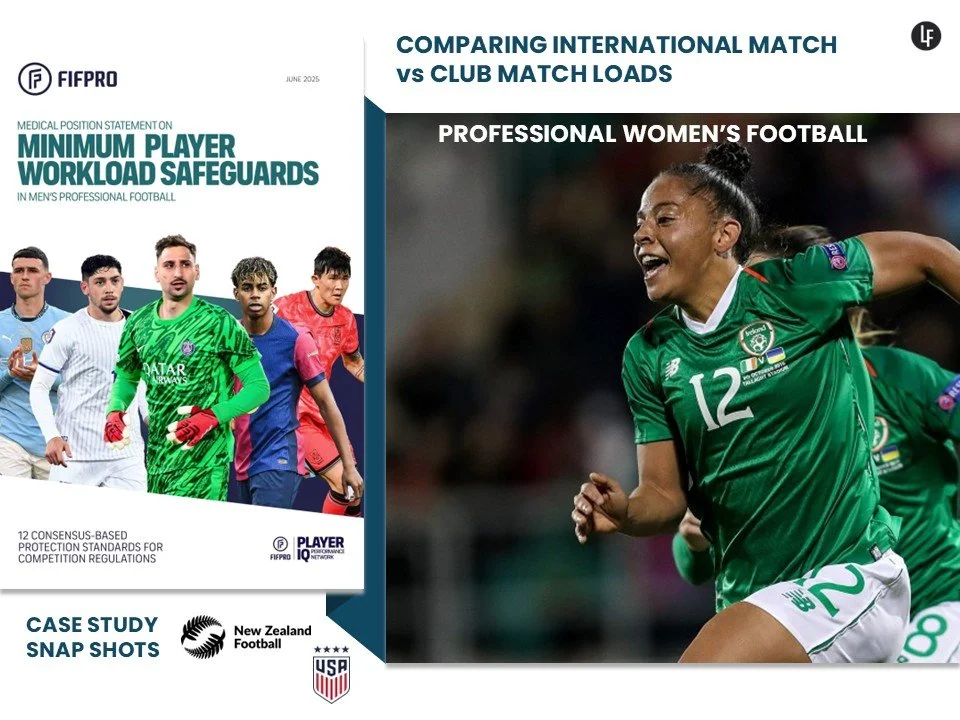
With the Women's Euros fast approaching in July 2025, the focus continues to grow on the physical and psychological demands placed on international footballers.
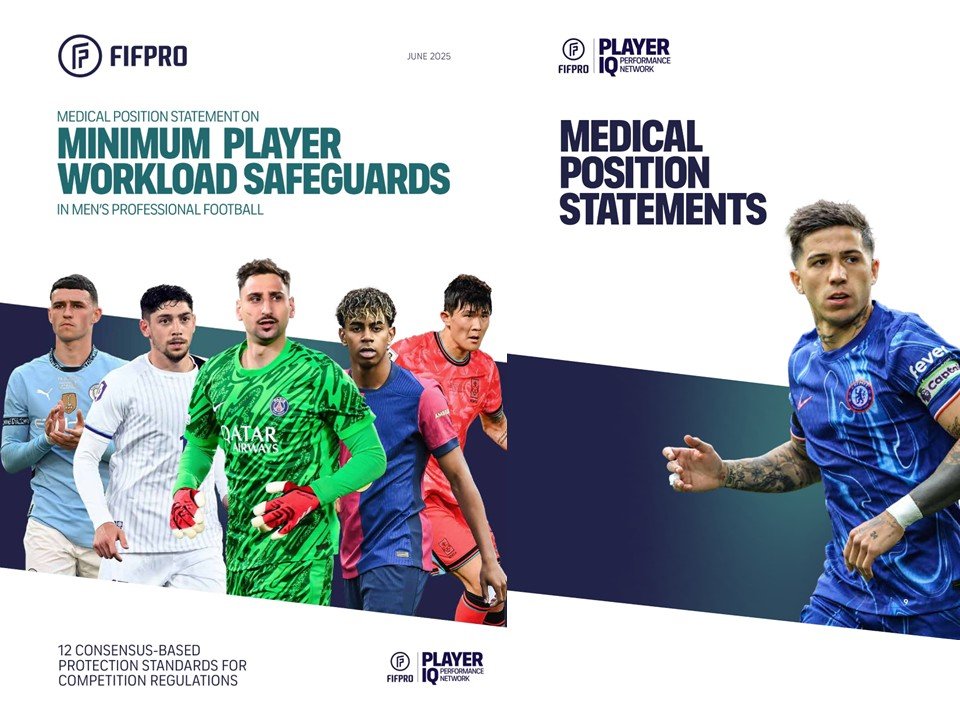
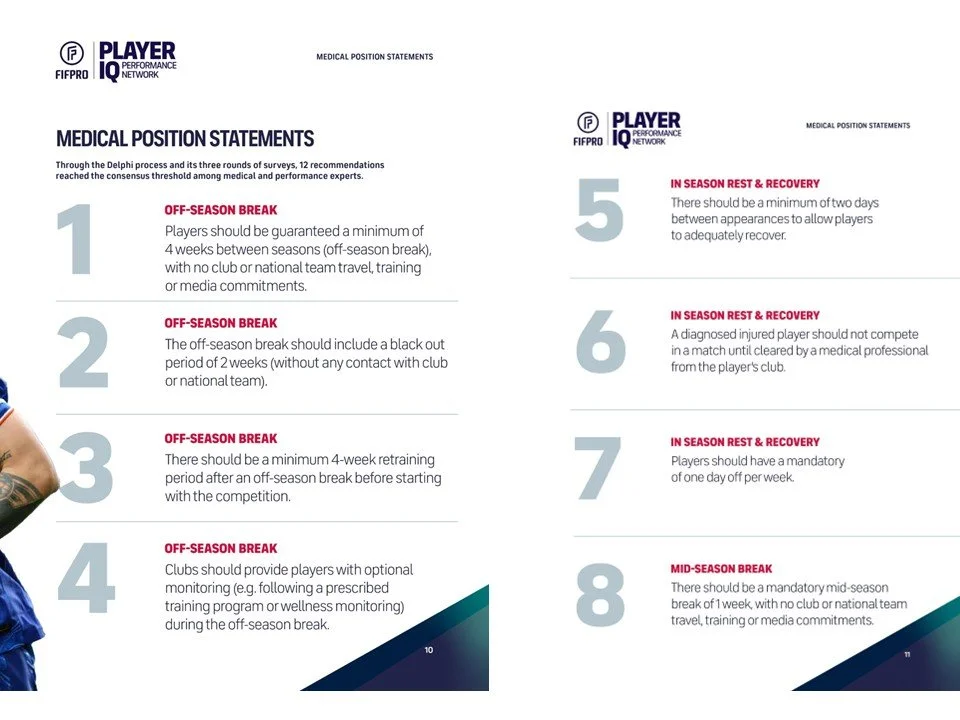
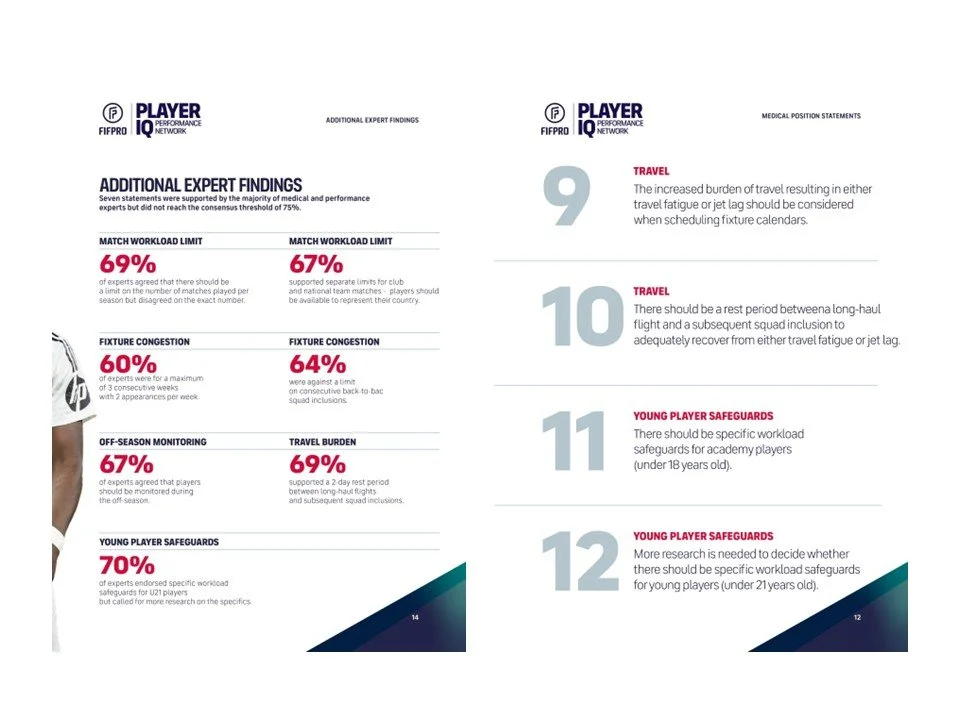
FIFPRO recently released a landmark consensus from 70 leading experts, establishing 12 evidence-based safety standards to help protect athletes from excessive workload. These recommendations include guaranteed off-season breaks, re-training periods and mandatory recovery following long-haul travel, highlighting the increasing importance of global standards for athlete welfare.
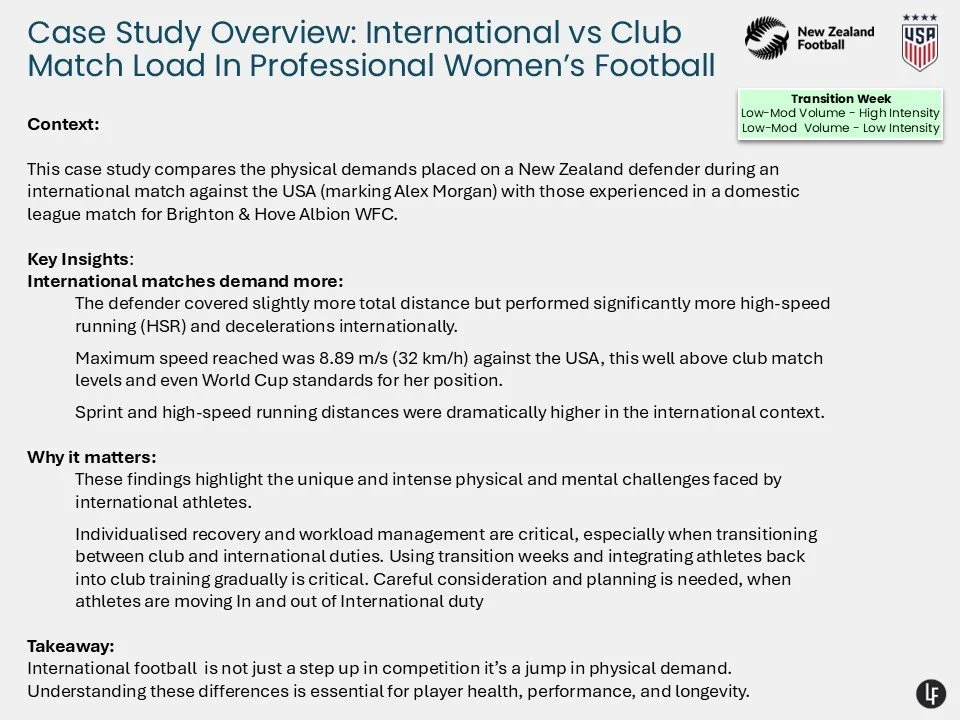
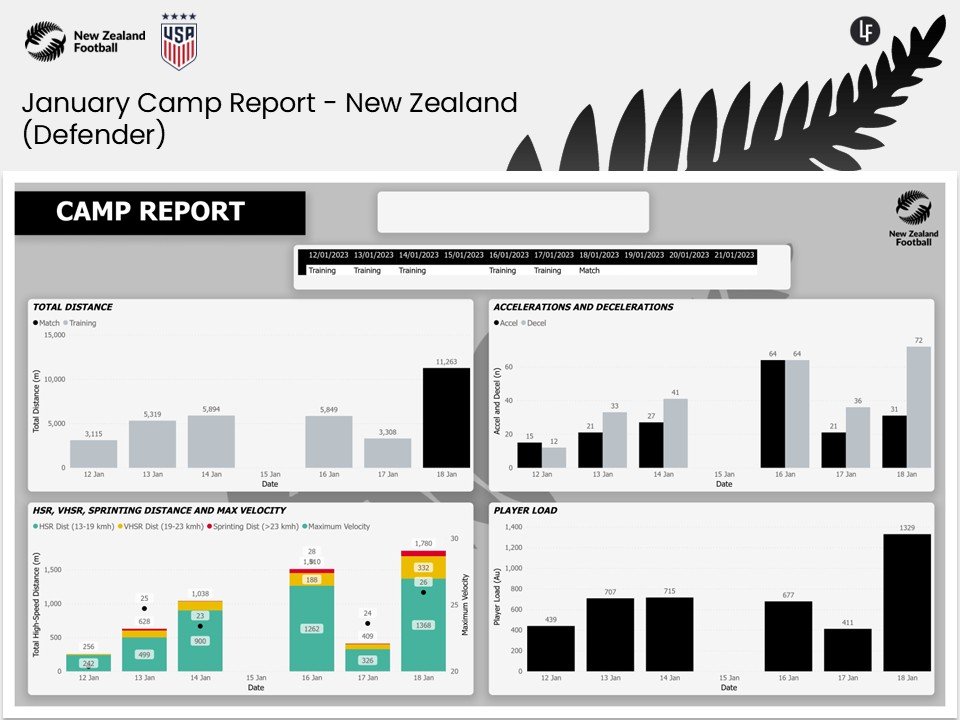
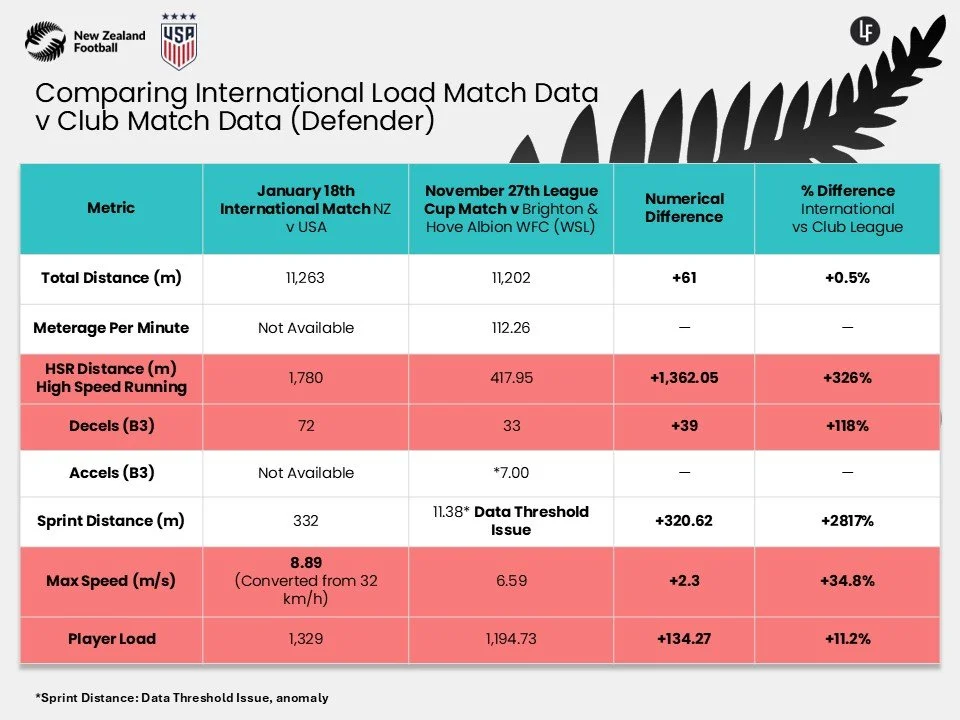
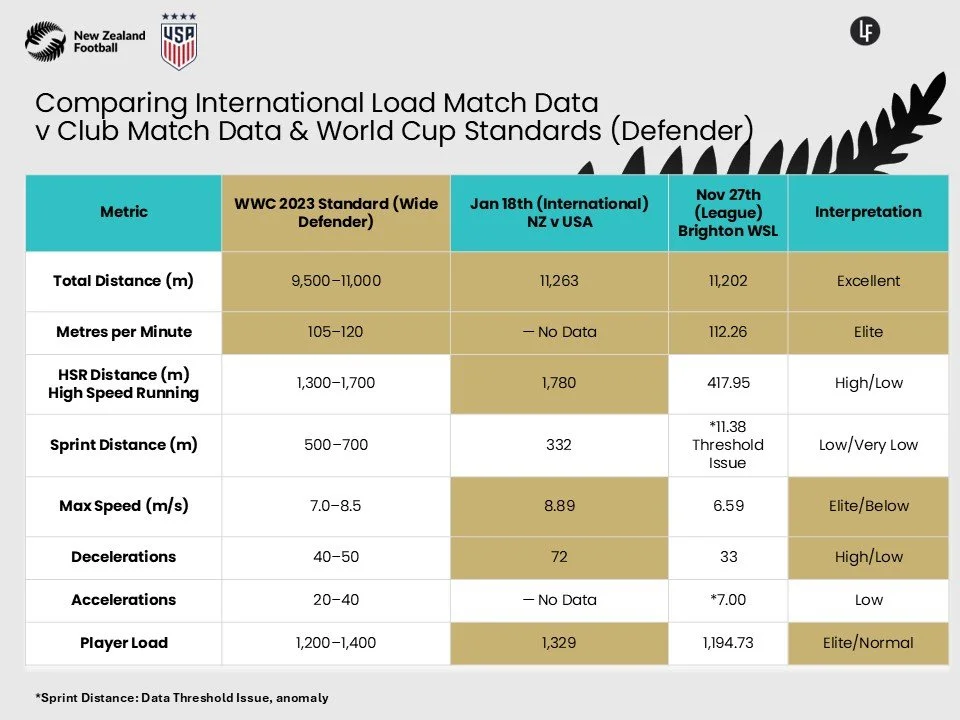
This case study compares the match loads of a New Zealand defender, marking Alex Morgan during an international fixture against the USA, with the same athlete's club performance against Brighton & Hove Albion WFC in the Barclays Women's Championship League Cup. This represented her first national team camp and first international fixture against the United States.
Key Findings
Max Speed: 8.89 m/s (32 km/h) internationally, exceeding club-level performance and surpassing many published World Cup defender benchmarks. Similar trends were observed within Concacaf competition data, where athletes demonstrated progressively increasing speed outputs as tournament demands intensified.
High-Speed Running: 326% higher during the international fixture.
Decelerations: More than doubled during international competition.
Overall Load: International matches can require defenders to perform at or above the physical demands frequently associated with attacking players.
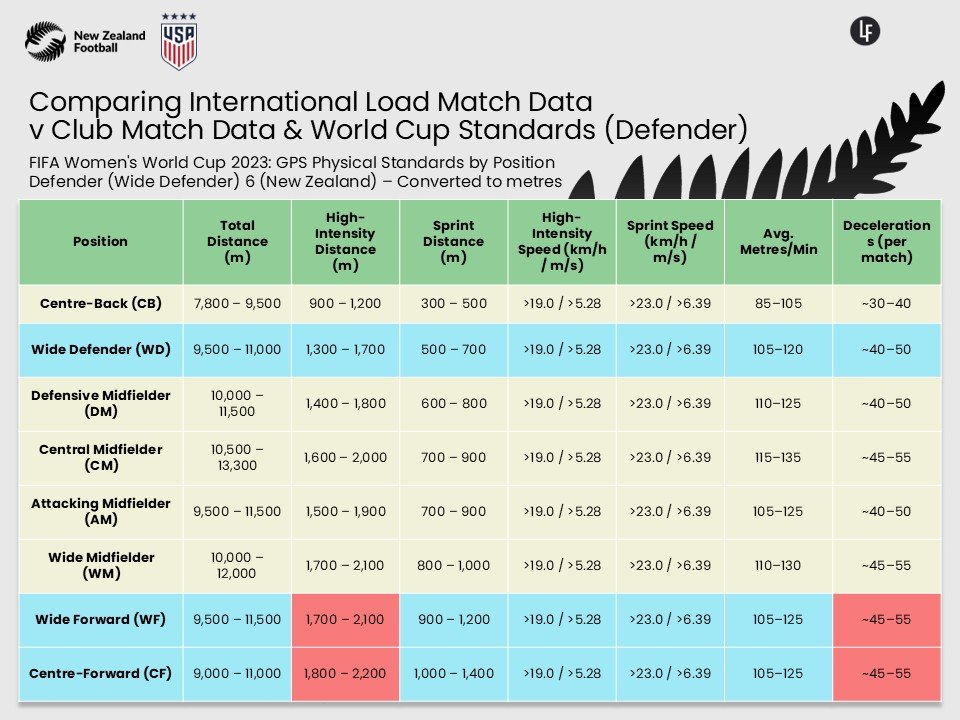
FIFA Women's World Cup 2023 Standards
While athletes may have designated playing positions, international football regularly requires them to perform at the physical level of entirely different roles.
In this case, the defender's match demands exceeded typical defender benchmarks and, across several metrics, approached or surpassed those commonly associated with forwards.
This demonstrates that positional labels can be misleading at the highest level. Match demands may require defenders to perform workloads equal to or greater than those expected of forwards, highlighting the importance of broad preparation, individualised recovery strategies and careful workload management.
Athletes at the Centre
Preparing athletes to manage the demands of multiple positional requirements is increasingly important within elite football.
Training for durability, robustness and recovery capacity is critical during congested schedules and towards the latter stages of a season.
As elite men's and women's football continues to evolve, clubs, federations and governing bodies must prioritise athlete welfare and apply evidence-based workload management practices. Listening to athletes and providing the quality of care, support and recovery they deserve remains central to sustainable performance and long-term player wellbeing.