Tendinopathy Strategies - The Brain, Sport Performance and Injury
Tendon Strategies
The Brain, Sport Performance and Injury
This information is gathered from some of the best practising specialists, leading scientists, and researchers in the fields of performance, injury, and tendinopathy rehabilitation. New research is constantly emerging, so some of this information may now be dated, but I have used it as a guide to inform my practice. I have not created anything new, rather I have borrowed what I felt were the most useful concepts to apply in the real world.
Part 1: Background
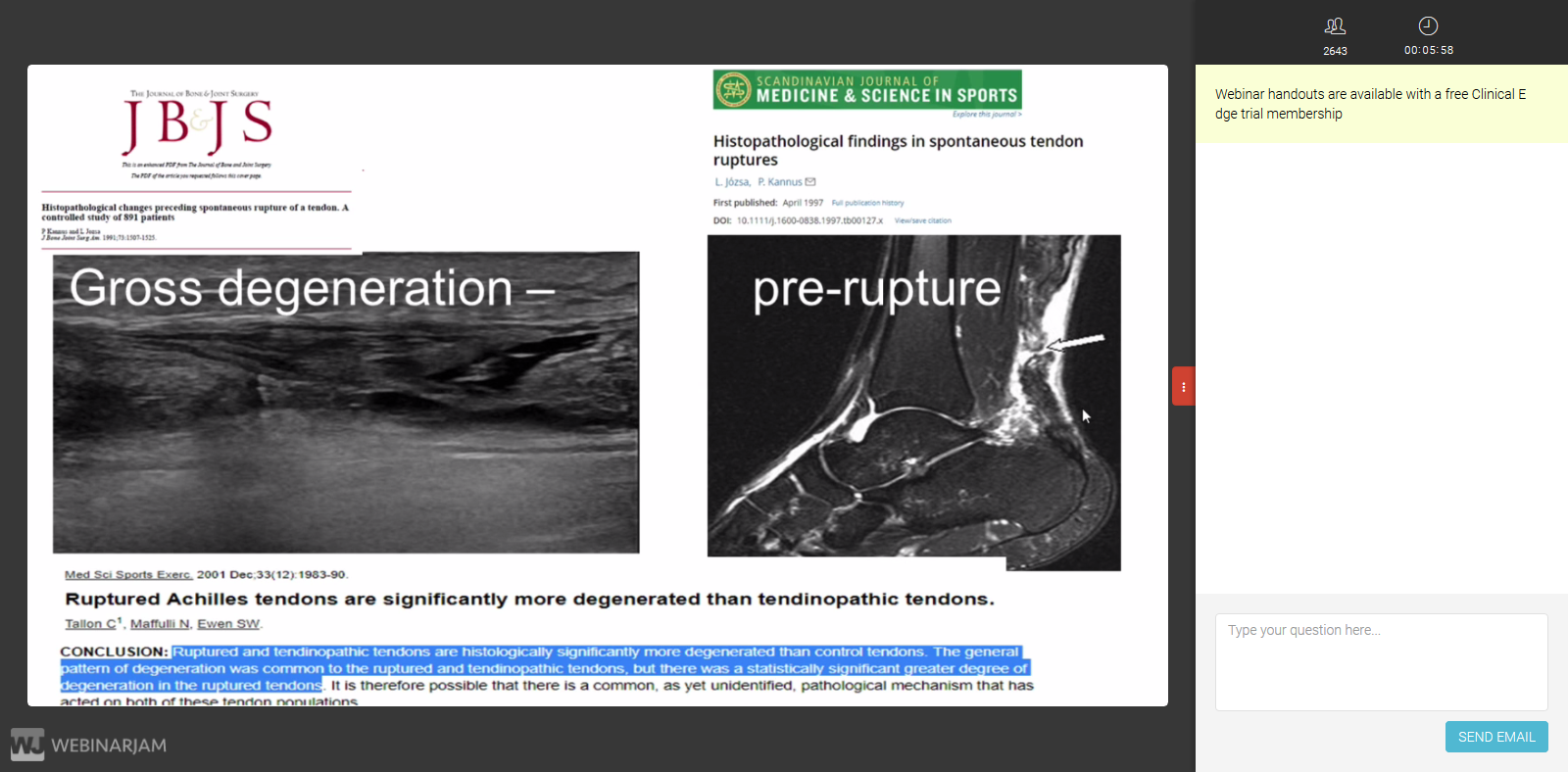
Here I describe the strategies I used with a female sprinter who had ongoing Achilles tendon issues. Within her family, Achilles problems appeared hereditary. One brother suffered a complete Achilles tendon rupture, while another experienced similar Achilles tendon issues.
She was unable to train to her maximum potential because pain regularly prevented her from completing acceleration and block work. Plyometric training had to be carefully managed, with training dosage kept to a minimum. Sprint sessions often had to be stopped early. This was affecting her both psychologically and physically, as pain was constantly present in the background.
Another important factor was the amount of time she spent travelling to training, as she was not based locally. This impacted both sleep quality and recovery capacity.
If the Central Nervous System (CNS) and Autonomic Nervous System (ANS) do not receive enough recovery time to reset and regenerate, this becomes a significant problem for sprinters. Without adequate recovery, athletes cannot consistently move to higher levels of performance. Therefore, fatigue management became a key component of the programme to help reduce overall stress.
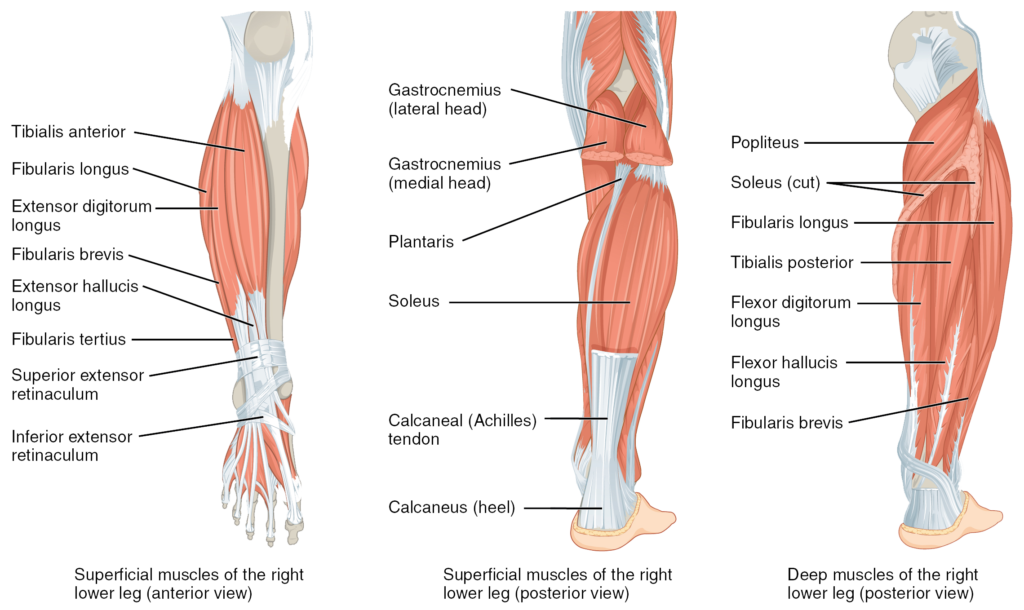
Lower-limb and Achilles tendon stiffness are fundamental qualities for speed production. The first point of contact with the ground is through the feet. If an athlete cannot strike the ground with sufficient force, they cannot generate maximum speed or velocity.
The objective was to find a solution and develop a protocol that would resolve her Achilles tendon issues, improve connective tissue quality, increase tissue tolerance, enhance the capacity to cope with a variety of loads at both slow and fast speeds, and improve her overall ability to recover.
My first point of discovery was the work of Dr Ebonie Rio at La Trobe University and the La Trobe Sport and Exercise Medicine Research Centre (LASEM). This then led me to the work of Professor Jill Cook and Dr Sean Docking, both at La Trobe University, alongside Dr Keith Baar at UC Davis School of Medicine and Seth O'Neill at the University of Leicester.
From there, I simply followed the information trail.
Isometrics
Heavy Isometric Loading and Pain
After assessing the risk factors, and the physical demands of training and competition. I had established that the Achilles tendon was driving the pain. By using a functional criteria and hierarchy of needs, the first task was to address pain. If you are in pain this will reduce your training capacity and access to strength. Research has shown that heavy isometric loading works to reduce pain, in comparison with heavy isotonic loading where the joint angle changes and the muscle shortens and lengthens due to concentric (shortening) and eccentric (lengthening) action.
Brain imaging techniques show that heavy isometric loads change the cortical inhibition to the tendon, if you are in pain it reduces muscle and training capacity. The use of heavy isometrics before training and competition can be used. Isometrics can be used for pain management, when pain flares up it is called a reactive tendon or tendons that are irritable, i.e. some days better than others. Isometrics can be used as the first line of treatment.
This video below is an easy explanation on how we can understand pain mechanisms and how we can retrain the brain to reduce pain.
Understanding Pain In Less Than 5 Minutes
And What to Do About It!
It was made by GP Access and the Hunter Integrated Pain Service, New South Wales, Australia.
It is important to ensure that the entire kinetic chain is trained, including every component that absorbs, stores, and releases energy.
What we want to see is pain settle from its peak. We can often reverse a reactive tendon and manage loading in a way that reduces reactivity and minimises flare-ups. Reactive and degenerative tendon presentations are often seen in older and more experienced athletes.
Research has shown that both age and gender can be contributing factors, with men appearing more susceptible in particular age groups, especially during their 40s and 60s.
In this case, my athlete presented with a reactive tendon, so the priority was to return the tendon to baseline first.
To address this, I examined the loading the athlete had previously completed and then individualised the loading strategy to identify what worked best. Tendon management is not a one-size-fits-all approach. Every tendon will respond differently, and every athlete's situation is unique.
I reviewed both the sprint programme and the strength and conditioning programme to identify loading levels that matched the athlete's capabilities and stage of development.
For example, the loading requirements of an elite athlete will be very different from those of the general population.
Functional Assessments
Functional assessments were used to identify the athlete's limitations, understand the demands of sprinting, and establish the most appropriate rehabilitation pathway. The objective was not simply to reduce pain, but to restore the athlete's ability to produce force, tolerate load, and return to high-speed sprinting.
Assessment focused on the entire kinetic chain, identifying where deficits existed and whether these deficits were contributing to Achilles tendon loading and symptom presentation.
Areas considered included:
- Foot and ankle function
- Calf strength and endurance
- Achilles tendon stiffness and tolerance
- Knee and hip function
- Sprint mechanics and force production
- Training load and recovery capacity
- Sleep, stress, and fatigue management
The goal was to understand not only where pain existed, but why the tendon continued to become reactive. Functional assessment allowed the rehabilitation process to move beyond symptoms and focus on the underlying factors affecting performance and recovery.
For sprint athletes, assessments must always reflect the demands of sprinting. The ability to tolerate high forces, produce stiffness through the ankle and Achilles tendon, and repeatedly express speed are critical requirements for successful return to training and competition.
Restoring the capacity of the tendons is important, if it has been loaded pass the point it’s been trained to do. You cannot be expected to sprint or do fast explosive movements if you just do slow eccentric loads. A gradual build-up of load will prevent spikes when the athlete returns to competition.
Therefore, treat the tendon as an inflammatory driver, as the capacity of tissue has been exceeded. Adjuncts can help you get started with exercise, but it’s important to remember that exercise or training is the thing that works. Rest leads to wasting of the muscle and tendon structurally, the neuromuscular function of the muscle and tendon also reduces.
Early sport specialisation and overuse of tendons at Junior and youth levels can predispose you to tendinopathy later in life. For example, the female sprinter I coached topped the rankings at junior and youth age groups in the UK.
Restore Function
4 Stage Process
Here is the process below I decided to use and more importantly it worked!
- Isometric - Reduces pain and cortical inhibition, release brain inhibition.
- Isotonic - Strength programme, eccentric and concentric work above the calf.
- Energy Storage - Because the tendon is a spring it needs to be reworked using faster eccentric loads.
- Energy Storage and Energy Release for speed and power. Build endurance – but it needs to be repeatable and resilient to ensure athletes do not break down.
Example: Fast Eccentrics - Drop eccentric squat from side of box, Drop eccentric squat back of box. Drop eccentric lunge from side of box, drop lunge with a10kg kettlebell.
Transmission: Flex extension dumbbell snatch, weight plate single leg deadlift into high knee overhead position.
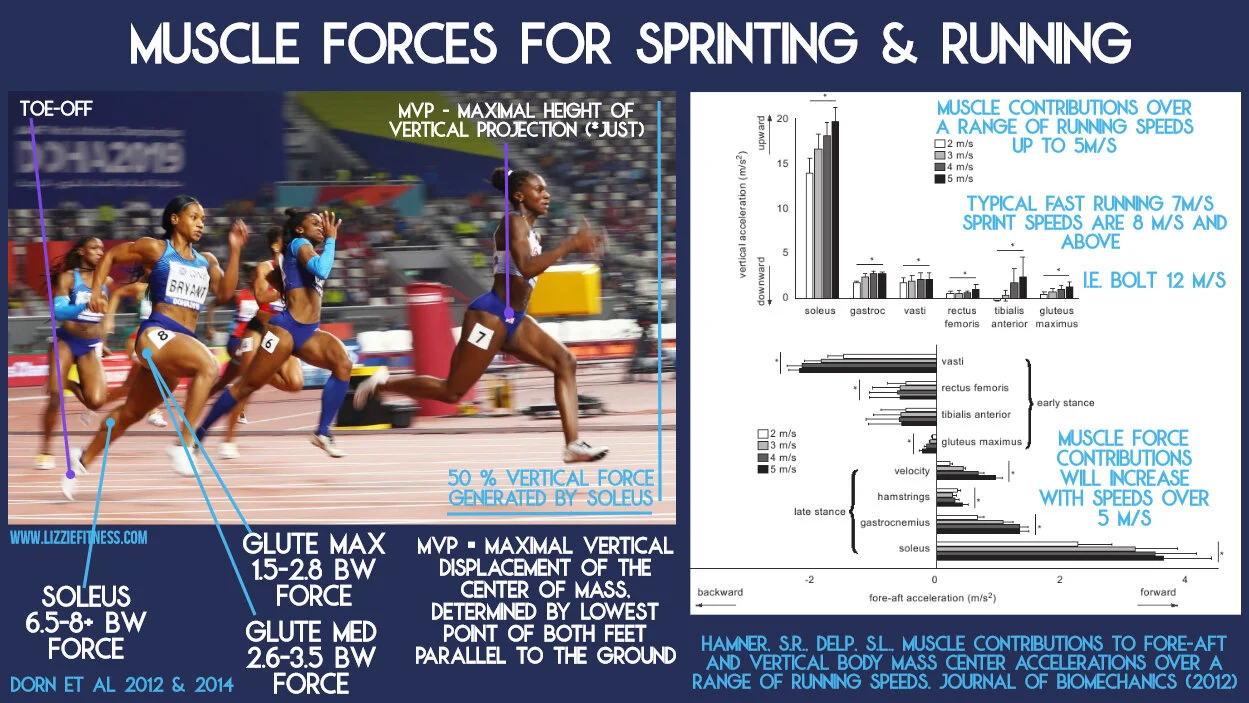
As you can see from my info-graphic below, force contributions increase with speed, therefore it is crucial that athletes must train to be able to cope with force. If athletes progressively get faster, this will also impact on load management and recovery.
Tendon Health Questionnaire
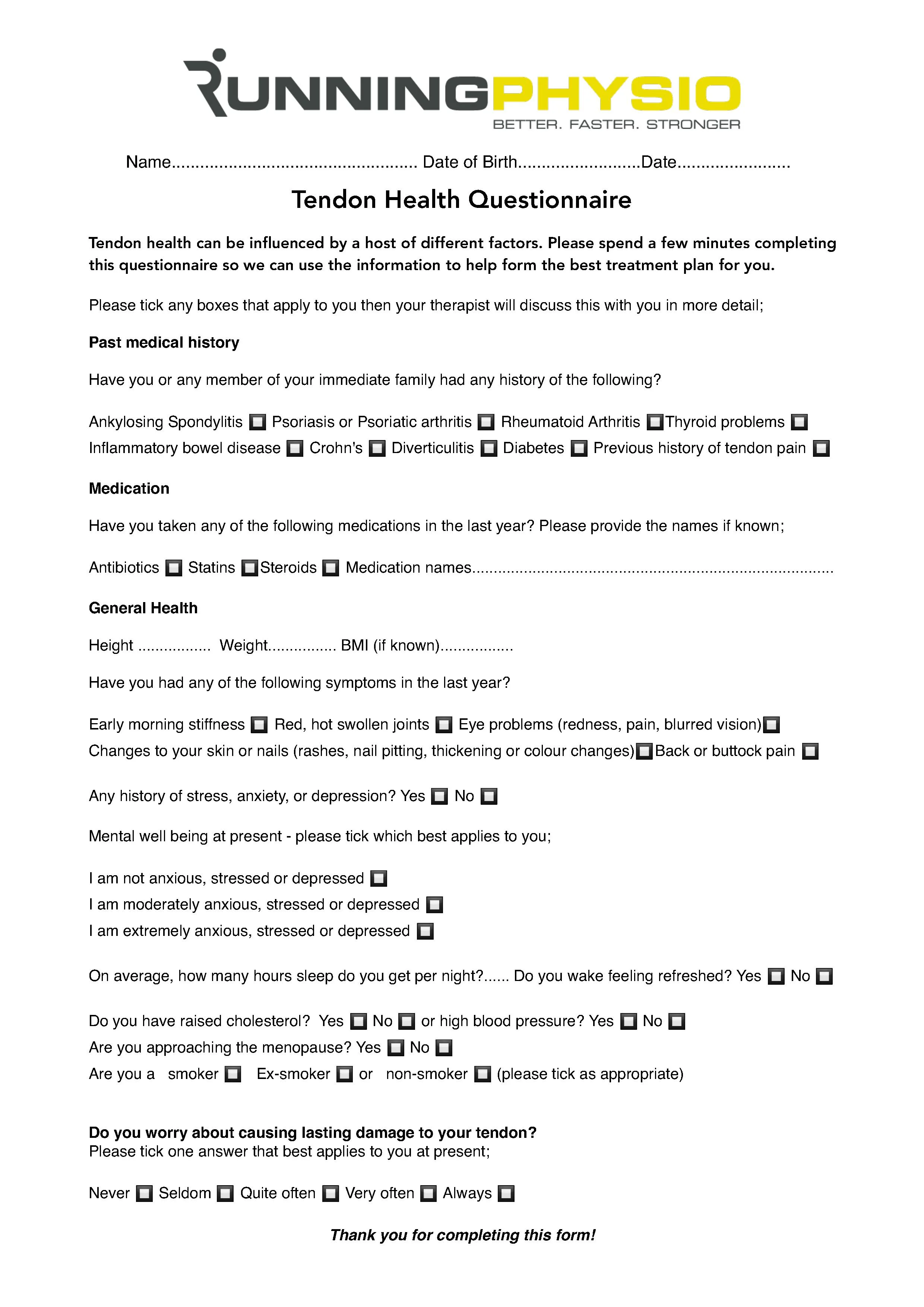
Questionnaires can also be used to find out the background of the athlete/individual or patient, below is a tendon questionnaire which can be used to inform best practice and how to support the athlete/individual or patient.
Cortical inhibition is a protective signal from the brain, it’s saying I’m hurt. Due to neural inhibition an athlete may be considered a load compromised athlete (LCA). The need to continue injury prevention/strength work three times a week, will act as an insurance policy but also keep up the tissue quality and improve tolerance. The aim is for long-term sustainability and return to competition; strength, power, speed and coordination training must continue. It is important to train around the injury and to keep to training routines. Maintaining training activity is important, but this must be carefully managed so we do not have boom and bust!
To work out the capacity of the tendon or find the threshold or correct load for tendons you can progressively load. Pain will be an indicator if it is too much. For sprinters hopping tests in a forward direction can be used. There is little evidence of pronation or bio-mechanical issues in tendinopathy upon onset of exercise. Strength and eccentric exercises are needed but quite fast, working on the release of energy for speed and fast explosive movements. Every tendon will be different, so it cannot be treated the same, treatment will need to be individualised.
For example 110kg week 1, week 2 115kg, week 3 120kg-128kg with a de-load in week 4 on the leg press machine as illustrated below.
Tendon Exercises
Tendon Exercises
Here are just some examples of the exercises I used, it’s also very important to train the posterior chain (everything down the back of the body). All aspects of athleticism need to be trained as nothing works in isolation. Dysfunction in one area can lead to dysfunction in another.
- Isometric Seated Leg Press
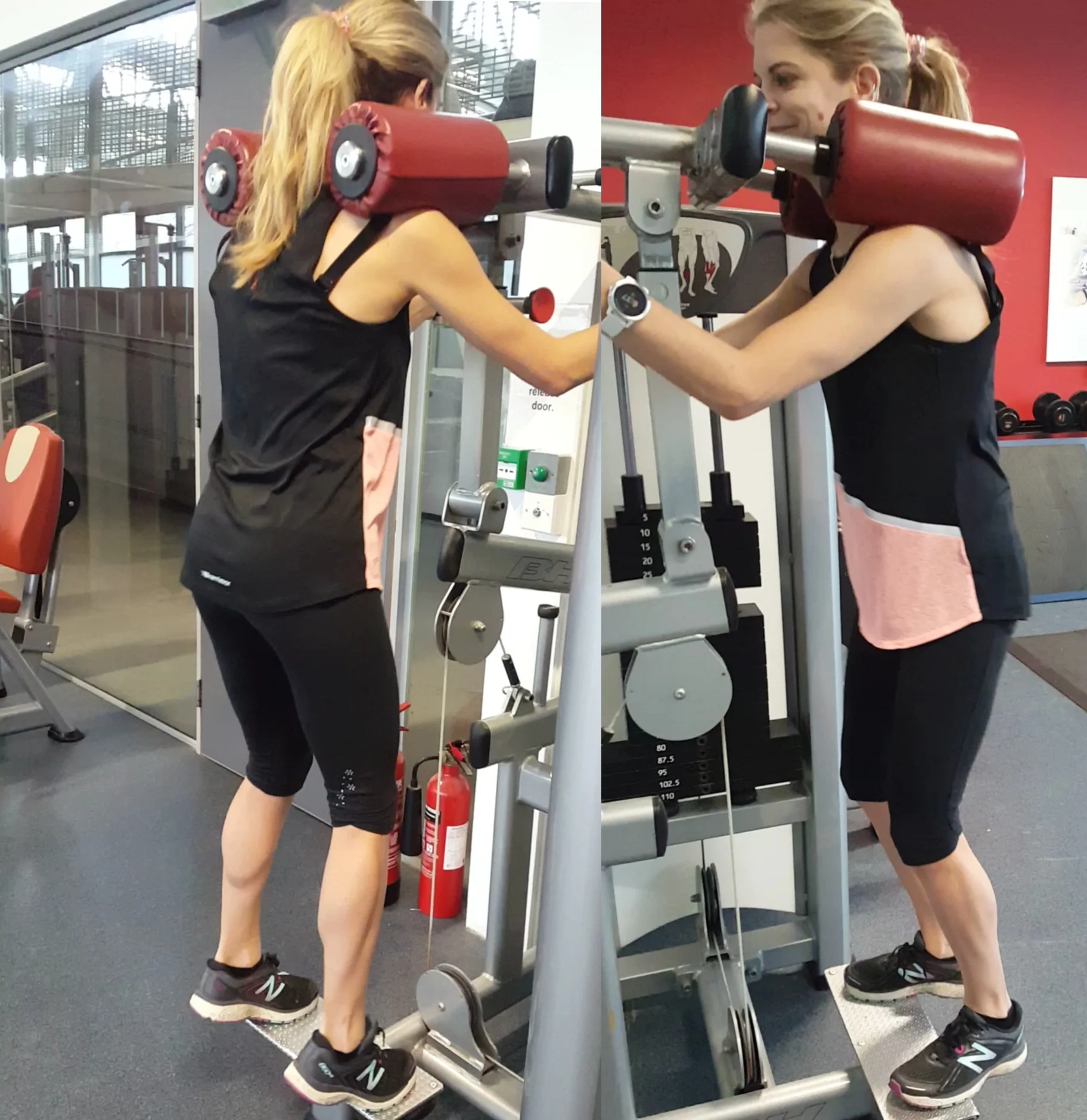
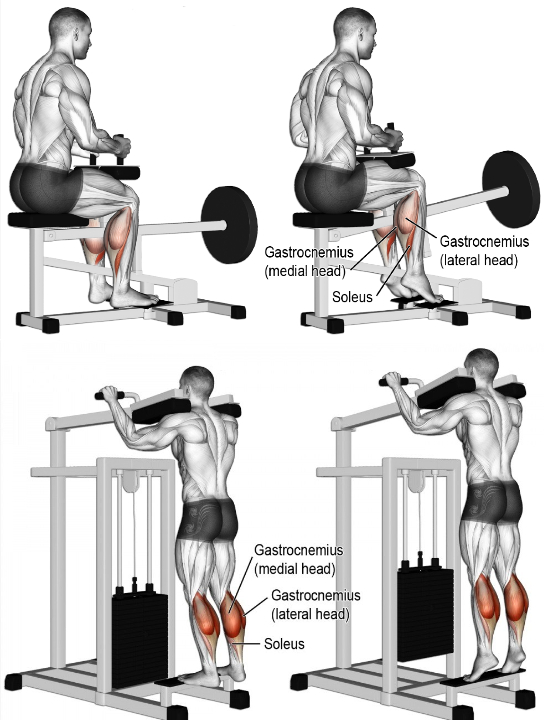
- Seated Calf Press - Energy storage & isotonic - These can also be completed at speed so it’s like a fast march.
- Standing Calf Raises - Energy storage & faster components
- Energy Storage and Release - Plyometrics & Ballistics.
Example in no order: Rudiments - dribble variations, hurdle hops, one leg speed hops, pogo straight leg speed bound, acceleration bounds. Jump squats, box jump up, CMJ. Mini hurdles/wickets, sled work/resisted sprints, block work. Isorobic/overspeed work, med ball throws etc.
A really good resource for Plyometrics is High Powered Plyometrics by James C. Radcliffe and Robert C. Farentinos. Continuing with speed training if the athlete can is important. It requires careful management of all components of sprinting, speed work and load. Speed is hard to find and very easy to lose.
Therefore, pain management is crucial, this enabled my sprinter to continue with speed work, plyo’s and ballistics. No longer in pain or by significantly reducing pain, enabled her to access more fully motor units required for speed and power. If you are in pain it is also very difficult to focus and concentrate, by reducing/removing pain it’s easier for the brain to make connections to the muscle and tendon complex and to execute motor skills.


Neuroplasticity and Tendons
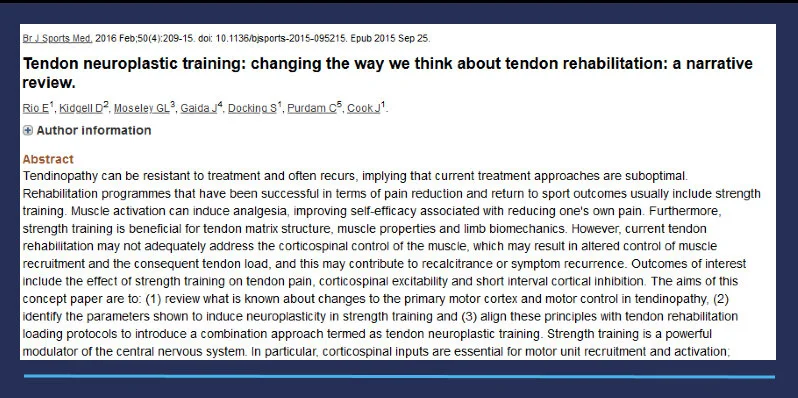
To help with excitability and brain inhibition or referred by Dr Ebionie Rio as the accelerator and brake, I used tendon neuroplastic training (TNT), as it is possible to make changes to excitability and inhibition by using an external auditory cue such as a metronome app. This was downloaded onto my sprinters phone, she listened and focused to the beat, whilst completing Isometric and strength training exercises, i.e. seated leg press. This helps the brain with attention to the task, focus and creates a clearer, cleaner signal to the tendon and muscles by cutting out the noise.
Think of it like finding a radio channel, if the signal is static, noisy, or distorted this can be caused by signal reflections from buildings, mountains, trees, etc, just like the "ghosts" in TV reception (before cable). Multi-path distortion can occur even in strong signal areas, i.e. training environment. Therefore, due to interference, just like a radio channel to get the best reception, neuroplastic training (TNT) requires focused listening, careful tuning and some experimentation for success.
For example, using the metronome app, I could adjust the speed, beats per minute (BPM), complexity of the rhythms, use different sounds and adjust tempo along with variations of load.
Leung et al investigated the effects on excitability and inhibition of a single bout of visuomotor tracking compared with self-paced resistance training and metronome-based resistance training. They found that both skilled training and metronome-paced resistance training, but not self-paced resistance training, increased excitability and released inhibition in both the trained limb and in the untrained limb. This has implications for tendinopathy rehabilitation, as both corticospinal excitability (CSE) and inhibition have been shown to be different compared with controls. Rio E, Kidgell D, Moseley GL, et al. Br J Sports Med 2016;50: 209–215.
Self-paced exercises and training are programmes in which the athlete or individual completes varying sets, repetitions and loads all without external pacing strategies either visual or auditory.
These can be completed at speed, swapping feet in a fast marching action.
These can be completed at different speeds, or as Isometric holds.
Gelatin Supplementation Protocols
Practical Applications
All these methods can be applied when working with members of the public, recreational and amateur runners/athletes.
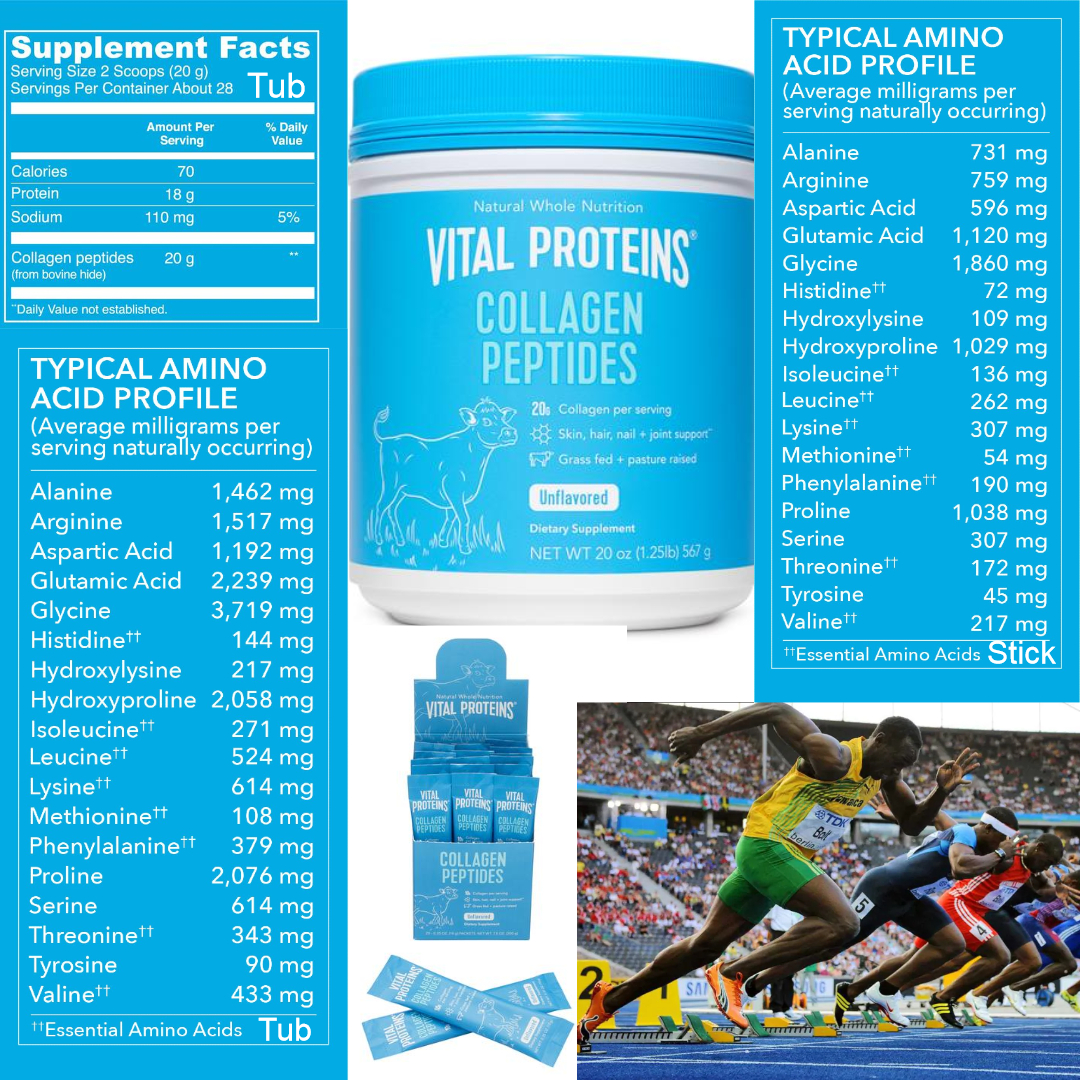
Below is a podcast link regarding gelatin and vitamin C supplementation. I used gelatin supplementation with elite 100m sprinters and had great results. Taking 20 grams 1 hour before training with vitamin C, I recommended 200mg, but this will need to be individualised. Performance nutritionists will be able to provide guidance on vitamin c dosage. I could not find a consensus for an optimal amount. Timing is important as it doubles collagen synthesis.
The gelatin I used is from Vital Proteins, but you can source from other providers. Like with all things the quality is important, do not go near pork gelatin, as other negative by products will be in it, plus it does not work due to the different nutritional profile.
Grass-fed, organic if you can beef gelatin contains essential amino acids such as proline, lysine, hydroxylysine and hydroxyproline. This will help with central nervous system recovery, sleep, and the big one connective soft tissue, tendon quality and health.
The female sprinter I coached lost weight and improved skin tone taking this too, nothing changed regarding her nutritional intake other than the consuming gelatin. But this change I believe was a result of better central nervous system recovery and quality sleep.
Now for vegan or vegetarian athletes/individuals a nutritional substitute is not available or has not been created yet.

Silky Water
You can take 15/20 grams or more, but it can take a little while for the digestive system to adjust. If you find yourself going to the toilet, that’s fine, it tends to clear waste out. Looking after brain to gut connections are important for overall health and well-being.
I have tried both gelatin and collagen peptides myself and it is different, like one of my sprinters said "silky water".
Adding it squash or putting it with something else would make it better.
As an alternative collagen peptide and gelatin taste great in coffee, I love it in lattes.
Resources
Here you will find just some of the resources i have used.
Podcasts
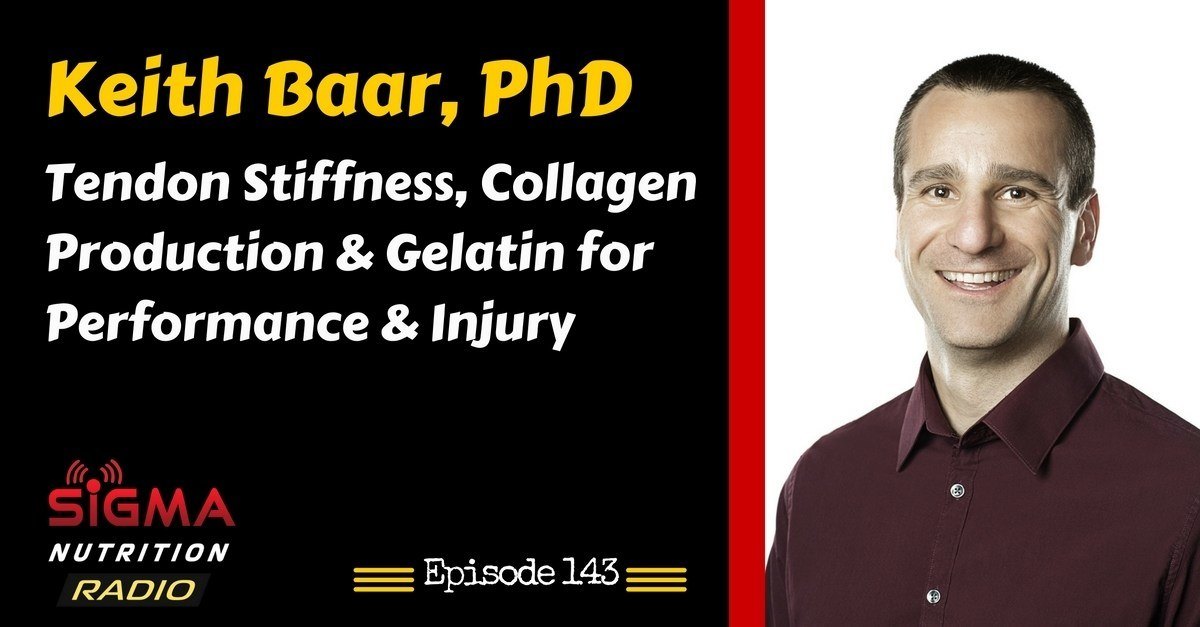
Here is a great podcast from Professor Keith Baar, covering all things to do with tendons, injury mechanisms, rehab strategies and performance.
LISTEN HERE
You tube
WATCH & LISTEN HERE
For more super insights into tendinopathies, here are some great presentations you can watch and listen too from Professor Jill Cook and Ebonie Rio.